
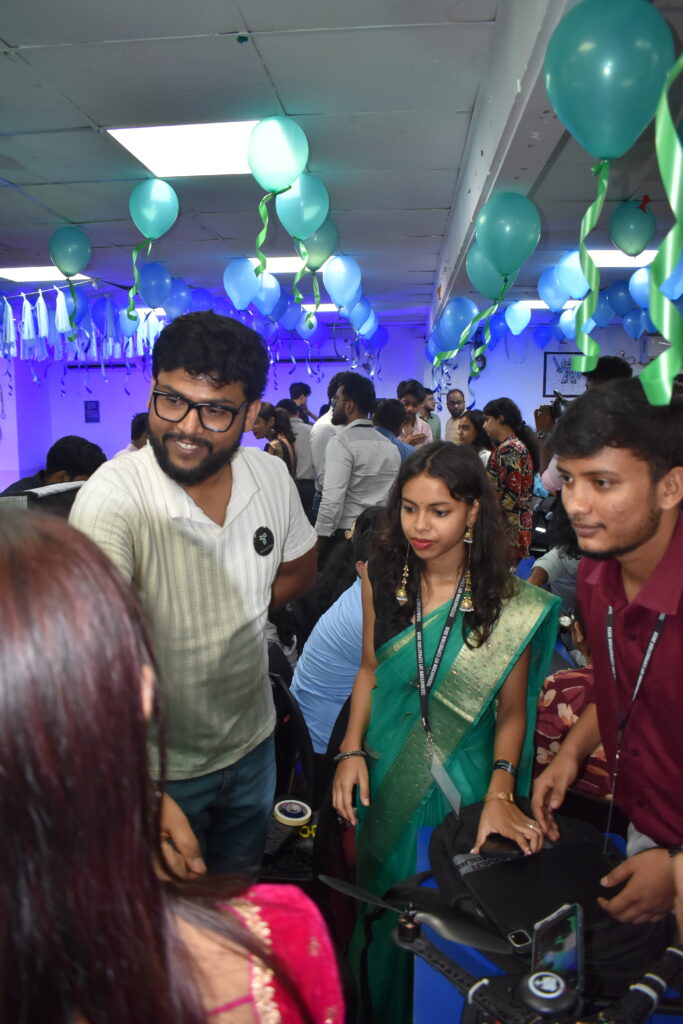
On the morning of June 3, 2026, the campus of Techno India University felt different, charged with an almost electric sense of anticipation. Corridors that ordinarily hum with routine academic life were alive with animated conversations, last-minute prototype adjustments, and the quiet confidence of students who had spent weeks, sometimes months, turning bold ideas into tangible reality. This was the day of IOT EXPOSITION 2026, organized by Technothon, and it promised to be anything but ordinary.
More than just a college event, the exposition was a statement, a declaration by the next generation of engineers that technology, when guided by purpose and passion, can genuinely change the world.
A Stage Built for Dreamers
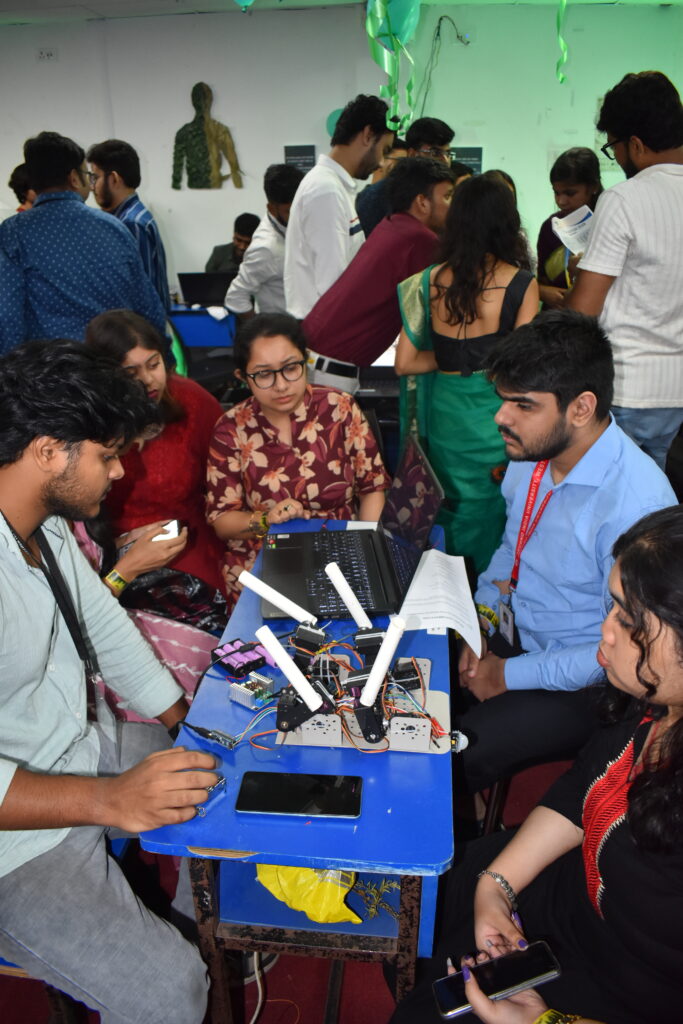
The Department of Computer Science and Engineering has always been a crucible of curiosity, and this year, that curiosity found its grandest expression yet. Students from across the department converged with projects spanning the Internet of Things, robotics, automation, and embedded systems, fields that are no longer the exclusive domain of research laboratories but increasingly the tools of young innovators in university workshops.
What made the event truly special was not just the sophistication of the technologies on display, but the stories behind them. Every project represented countless late nights, spirited debates between teammates, failed prototypes, and the quiet determination to get it right. Walking through the exposition floor felt less like attending a tech fair and more like stepping into a glimpse of what the world could look like five or ten years from now.
Luminaries Who Lent Their Presence
The event was graced by dignitaries whose presence underscored the institutional support and belief in student-driven innovation. Prof. (Dr.) Saikat Maitra, Vice Chancellor of Techno India University, set a tone of encouragement from the outset, his words resonating with a genuine appreciation for the spirit of experimentation the students embodied. Alongside him were Prof. Dr. Atanu Raha (IFS Retd.), Prof. Dr. Sujoy Biswas, Registrar and Director & CEO of Techno India Group, Dr. Rina Paladhi, Director of Techno India University, and Prof. Ishan Ghosh, Dean of Student Affairs, all of whom brought not just their titles, but their genuine enthusiasm for what the students had achieved.
Heads of Departments, faculty members, industry experts, and distinguished guests filled the venue, lending the proceedings the gravitas of a professional showcase while keeping its warmth firmly intact. For many students, the opportunity to present before such a gathering, to explain their work, defend their design choices, and field sharp questions, was itself an education beyond the classroom.
The Projects: Imagination Meets Engineering
If there was one thing that unified the projects on display, it was the desire to solve problems that actually matter. The standout innovations showcased at the exposition were striking in both their ambition and their practicality.
A Smart Alcohol Alert System for Drivers tackled one of the most persistent causes of road accidents, drunk driving, with a seamlessly integrated IoT solution designed to detect alcohol levels and prevent vehicle ignition. Simple in concept, the engineering behind it was anything but.
The RC Tank with 360-Degree Maneuverability drew gasps and smiles in equal measure, demonstrating precision control and mechanical ingenuity that belied its creators’ years of experience.
A Soldier Assistance System Using Emergency Flares reflected a sense of social purpose, imagining how embedded technology could provide critical support to armed forces personnel in distress situations — a project that carried emotional weight alongside technical merit.
The Autonomous Drone project captured imaginations with its vision of unmanned aerial vehicles navigating environments without human input, a technology with applications ranging from disaster relief to agricultural monitoring.
Perhaps the most conversation-starting project was the Mind-Controlled Car, a brain-computer interface project that literally translates neural signals into vehicular motion. It stopped visitors in their tracks, sparking the kind of wide-eyed discussions that remind you why engineering is, at its core, a deeply human endeavor.
Rounding out the showcase was a Smart Kitchen with Automatic Fire Detection and Extinguishing System — a project grounded in everyday safety, demonstrating that the best technology often addresses the most familiar risks.
Each of these projects was evaluated on a rigorous set of parameters, innovation, technical implementation, feasibility, societal impact, creativity, and presentation quality, by a distinguished judging panel that included Dr. Habibur Rahman (ECE), Dr. Abhishek Majumdar (Head, CSE-AI), Mr. Tanmay Dasgupta (ECE), Dr. Heleena Sengupta (Head, Civil Engineering), Mr. Ripon Roy, and Mr. Taqueer Ahmed. The evaluators brought both technical depth and real-world perspective to their assessments, pushing students to think beyond the prototype and consider the broader implications of their work.
The Judging Room: Pressure, Passion, and Poise
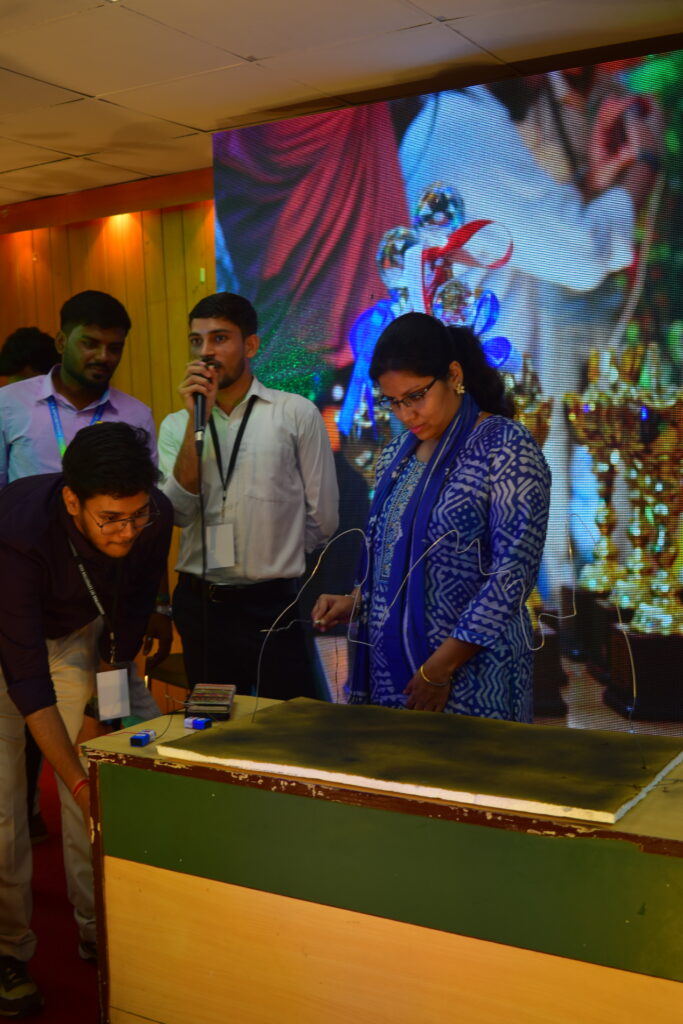
The project evaluation sessions were where nerves met preparation. Teams presented before the judging panel with a composure that many of their seniors might envy, walking evaluators through technical architecture, demonstrating live functionality, discussing scalability challenges, and articulating the real-world problem each project aimed to solve.
What emerged was not merely a technical review but a genuine dialogue. Judges probed assumptions, tested edge cases, and challenged teams to think on their feet. Students pushed back thoughtfully, defended design decisions with evidence, and acknowledged limitations with a maturity that spoke volumes about the quality of their preparation. For many participants, these exchanges were among the most professionally formative moments of their academic journey.
Champions Emerge
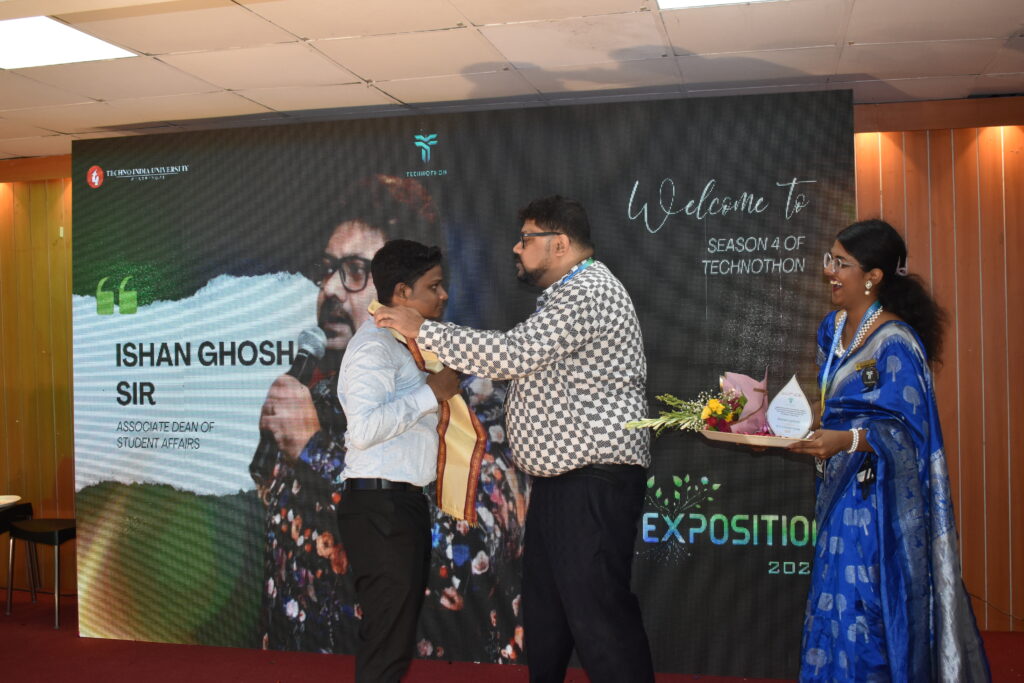
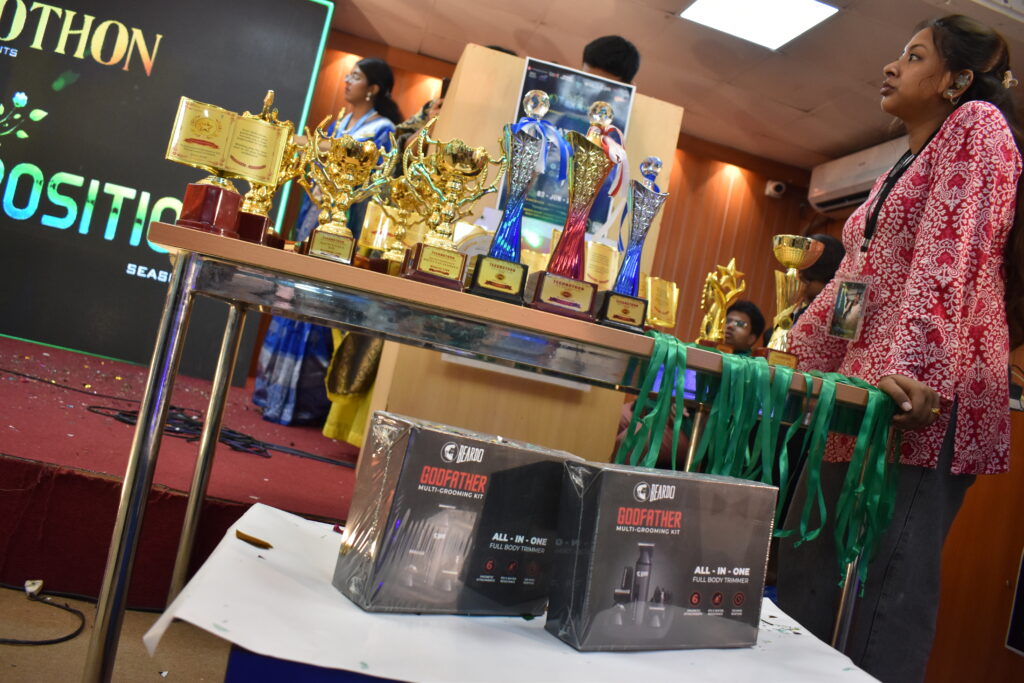
As the day drew to a close and the award ceremony began, the auditorium buzzed with a mixture of excitement, exhaustion, and pride. Prof. Ishan Ghosh, Dean of Student Affairs, addressed the gathering with genuine warmth, acknowledging not just the winners but the spirit and effort every participant had brought to the floor.
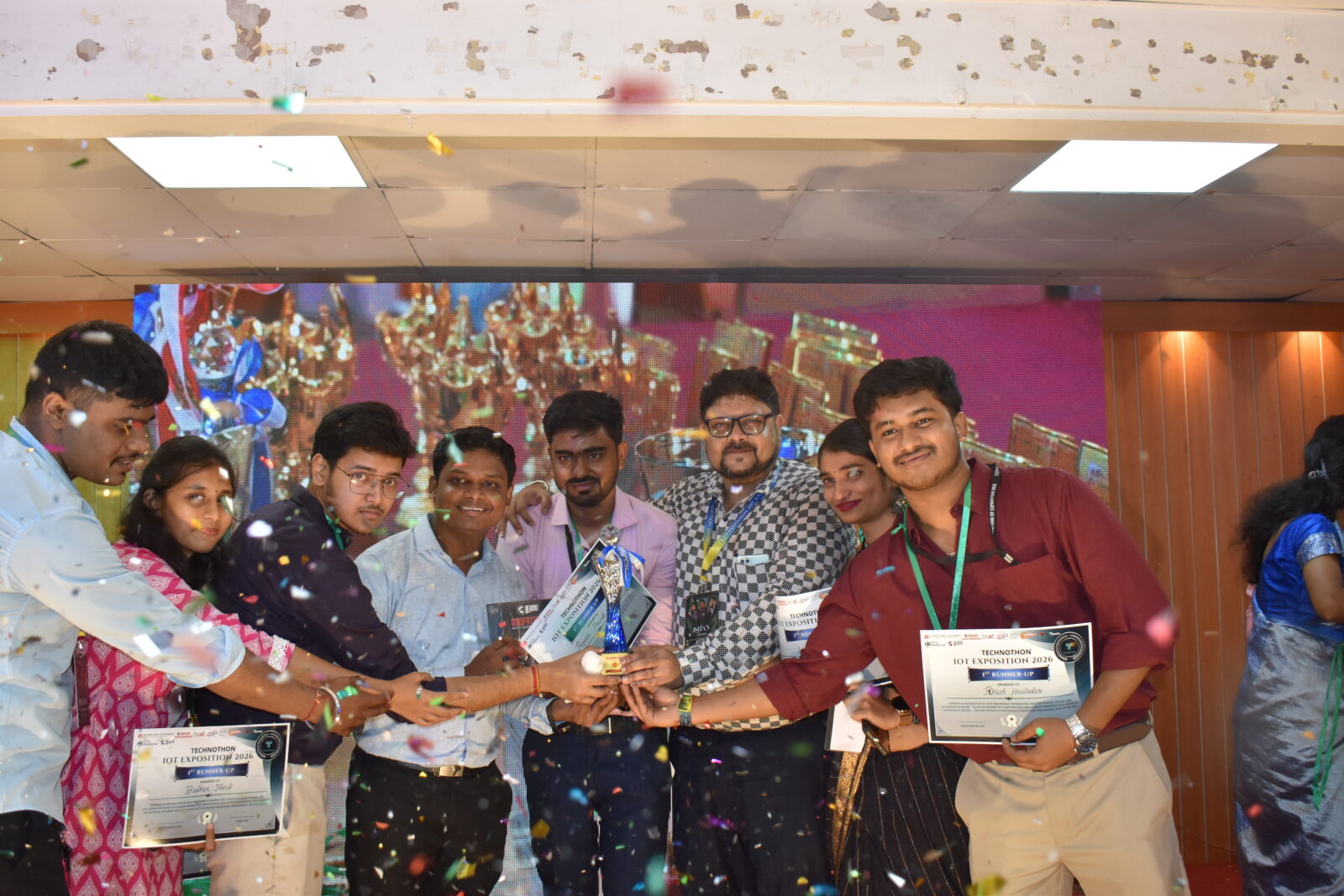
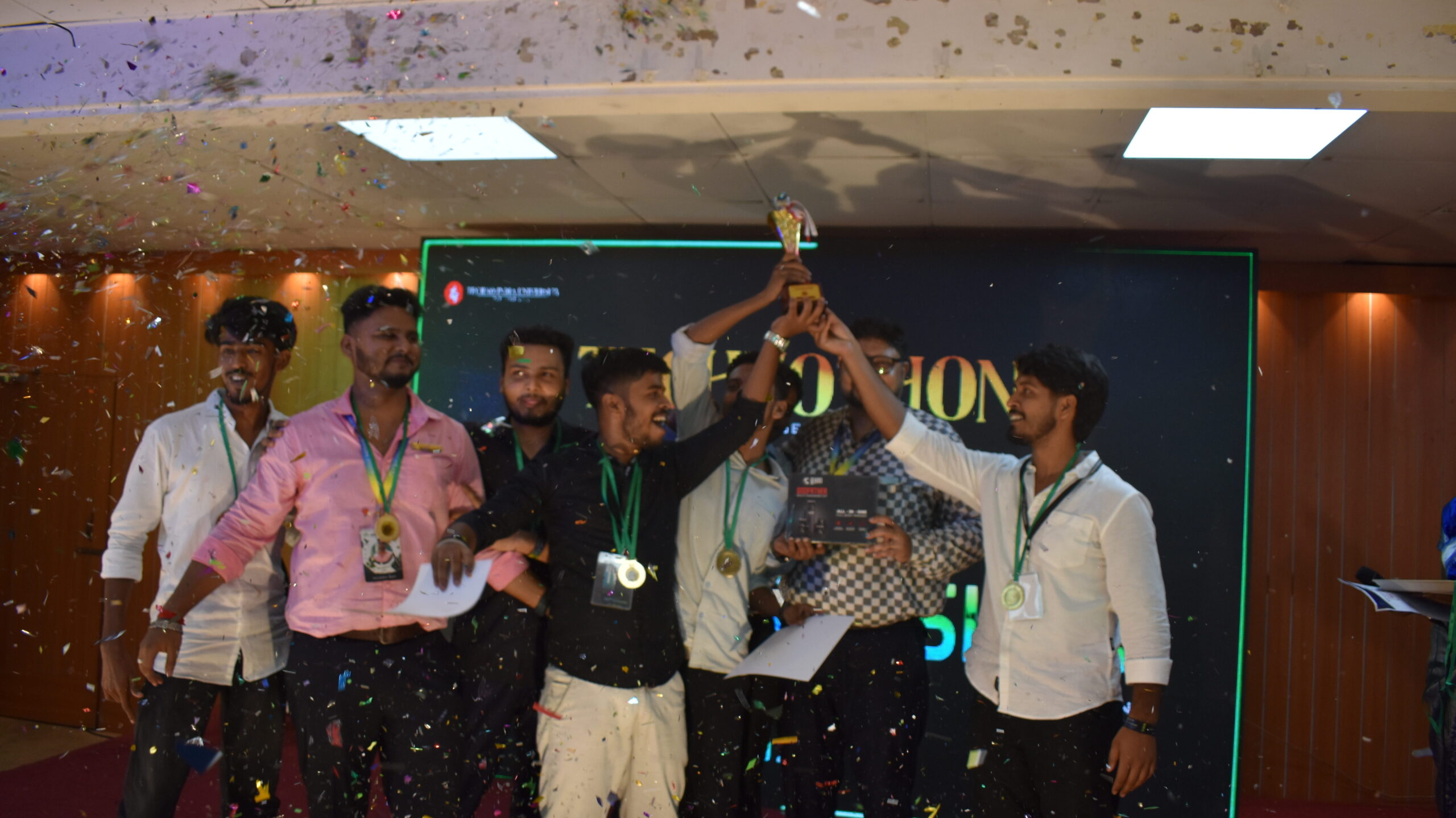
Team NeuroIoT, led by Md Zahid Ansari, claimed the top prize, their project standing out for its technical execution and the clarity of its real-world vision. The recognition was well-earned, but those who had watched Zahid’s team present knew it came as no surprise.
Team Tank Force, led by Priyangshu Prasad Singha, secured First Runner-Up honors, with their RC Tank project drawing admiration for its engineering precision and the sheer joy it seemed to bring both its creators and its audience.
Team CodeJux, led by Sourya Chowdary, rounded out the podium as Second Runner-Up, a recognition of the team’s thoughtful approach and strong technical presentation.
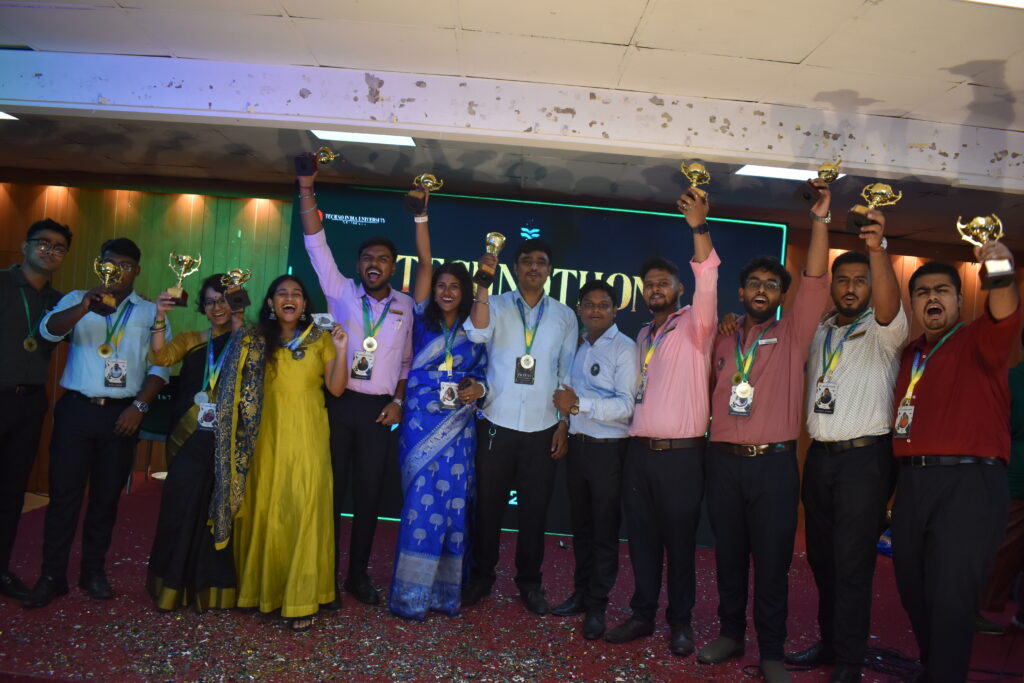
But in the truest sense, the award ceremony was a formality, a public acknowledgment of what had already been evident throughout the day. Every team that stepped onto that floor had already won something: the confidence that comes from building something real, and the experience of standing behind it in front of the world.
More Than a Competition
As students packed up their prototypes and guests filtered out into the evening, there was a feeling in the air that something meaningful had taken place, not just a competition, but a genuine celebration of what education can look like when it dares to reach beyond textbooks.
IOT EXPOSITION 2026 reminded everyone present that the students of today are not waiting for the future to arrive. They are building it, circuit by circuit, line of code by line of code, one bold idea at a time. For Techno India University, events like these are not just milestones on a calendar. They are proof of a promise: that the engineers of tomorrow are already, quietly and brilliantly, at work.