
Techno India University celebrated National Science Day on 28 February 2026 with enthusiasm, reflection, and a forward-looking vision as students, faculty members, and distinguished guests came together to celebrate the timeless spirit of scientific inquiry. Organized by the Departments of Physics, Chemistry, and Mathematics in association with the Institution’s Innovation Council (IIC) and IQAC, TIUWB, the event commemorated the discovery of the Raman Effect by Sir C. V. Raman, reminding everyone that science continues to shape and transform society.
The event also received active support from student innovation communities including Takshila and the Google Developer Group (GDG) on Campus, whose involvement added energy and enthusiasm to the celebration while encouraging greater student participation in technology, research, and innovation.
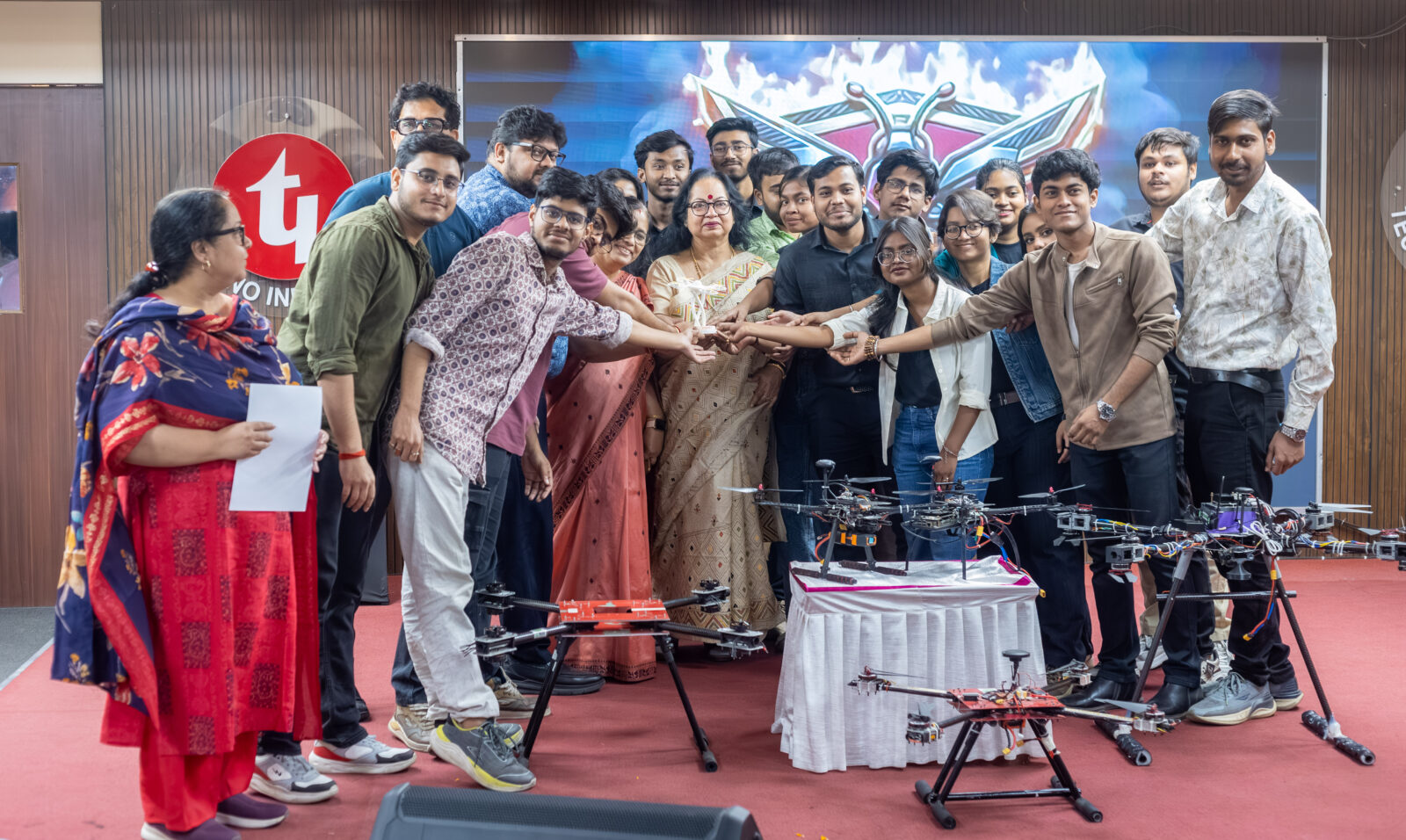
Launch of Drone Club “JONAKI”
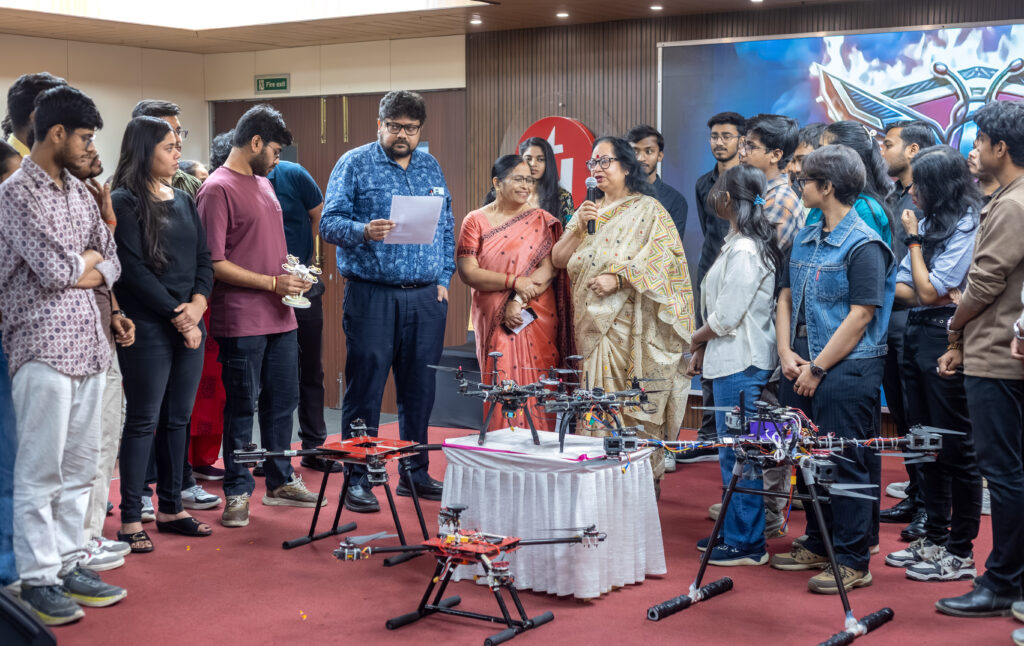
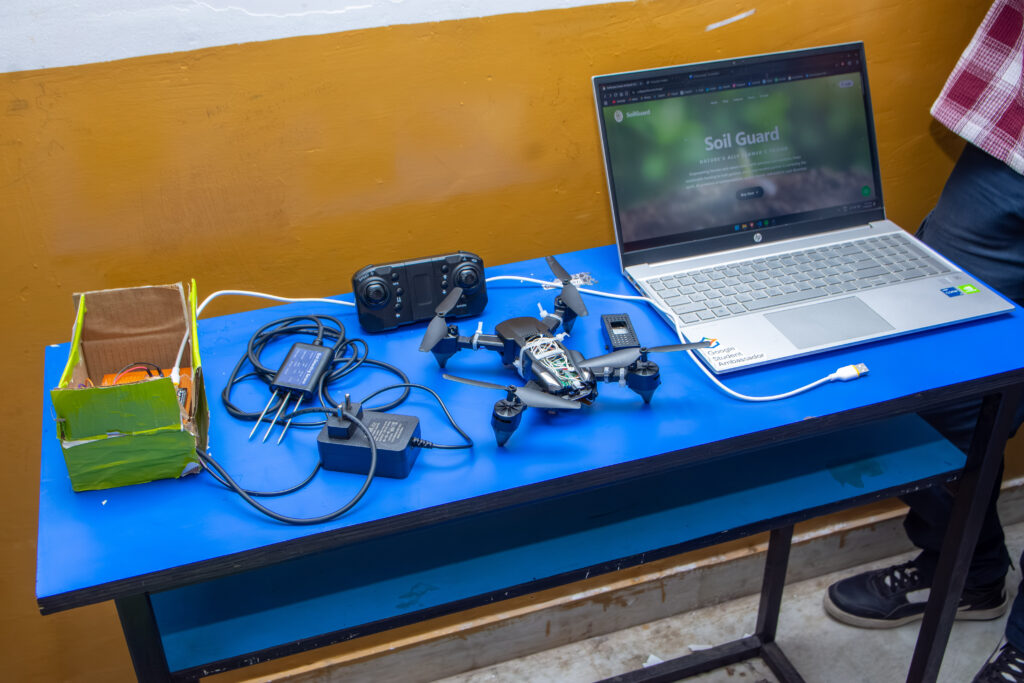
One of the major highlights of the celebration was the launch of the official Drone Club “JONAKI.” The initiative aims to encourage students to explore drone technology, robotics, and real-world technological applications. Mentored by Dr. Abhro Mukherjee, the club will provide a collaborative platform for students to experiment, design, and develop innovative projects in the field of emerging technologies.
Distinguished Speakers
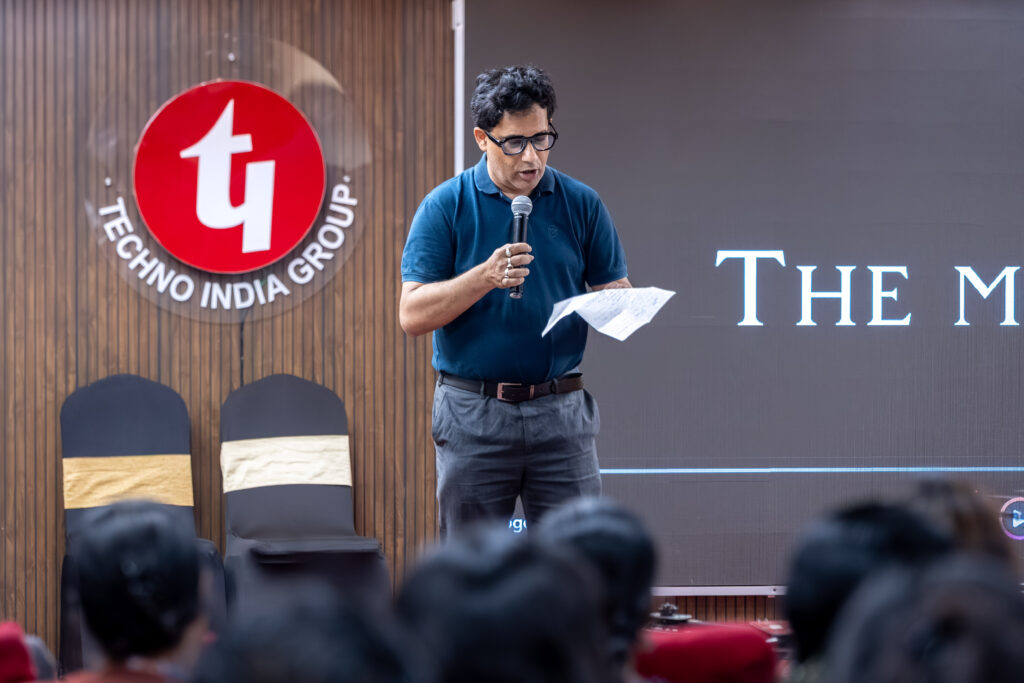
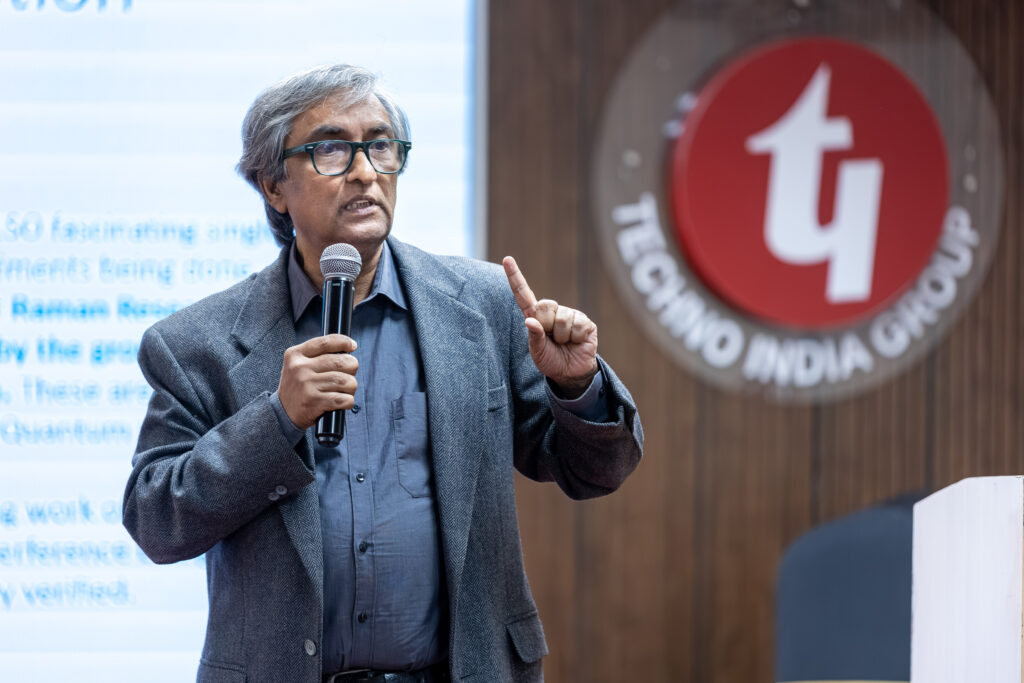
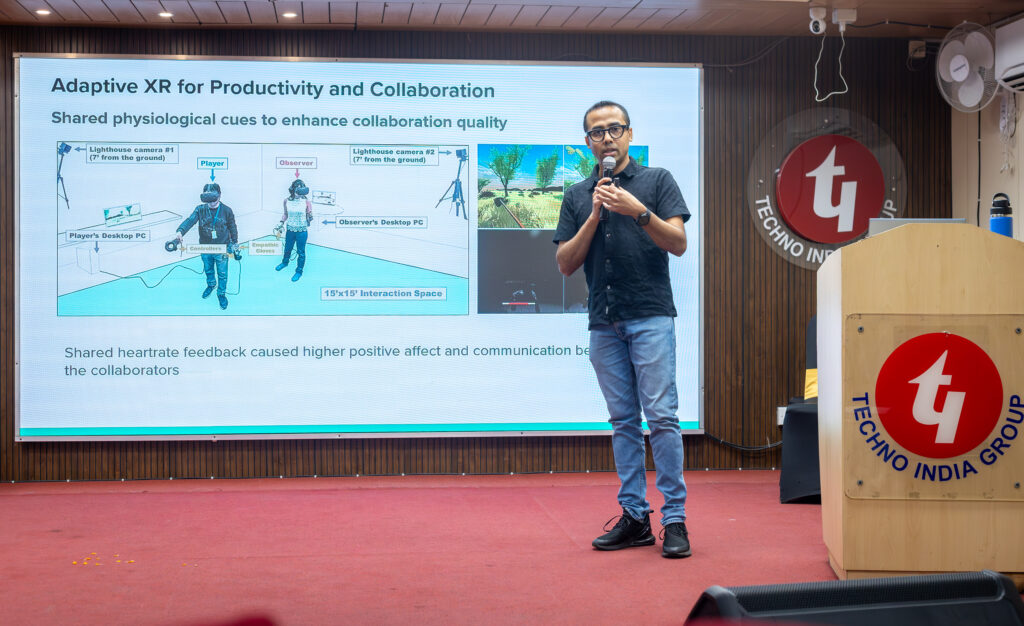
The celebration featured insightful talks by eminent speakers from the global scientific community. Dr. Debaleen Biswas, Research Scientist at the University of Chicago, shared perspectives on modern scientific research and encouraged students to pursue curiosity-driven learning. Dr. Utpal Chattopadhyay, Former Director and Center Head at Motorola Inc., spoke about the evolving role of science and technology in industry and emphasized the importance of critical thinking and innovation. Dr. Arindam Dey, Computer Scientist and former Research Scientist at Meta Labs, USA, highlighted the growing influence of computer science and emerging technologies, inspiring students to explore interdisciplinary research and technological advancements.
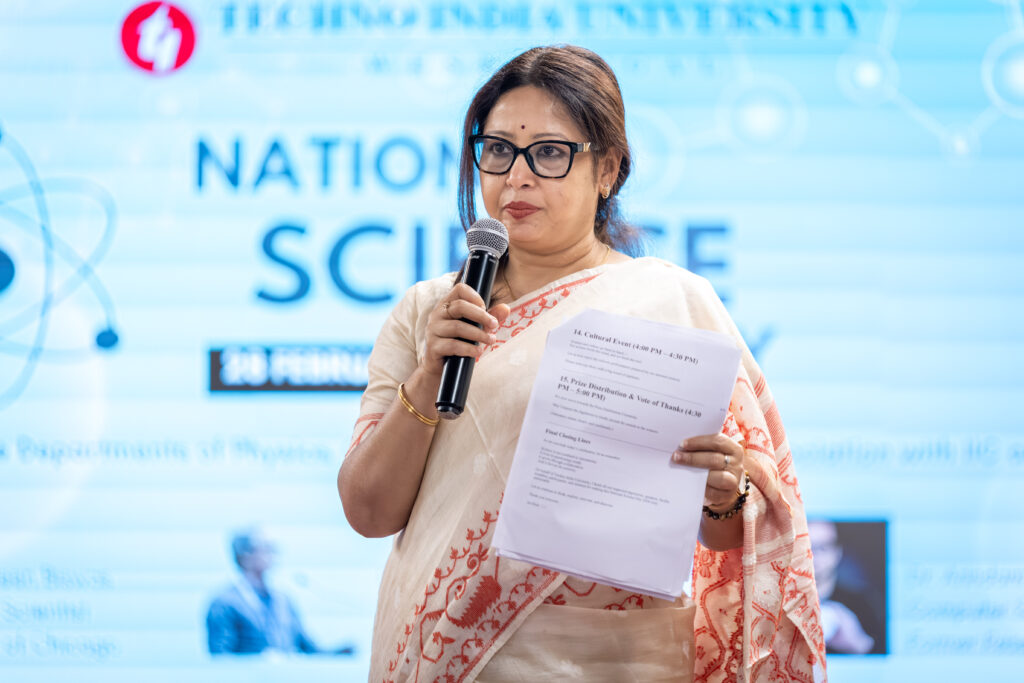
Manoshi RoyChowdhury, Co-Chairperson of Techno India Group, shared her heartfelt message on this significant occasion, expressing, “My heart joins you in celebrating the timeless spirit of inquiry that defines true education….” Remembering the historic discovery of the Raman Effect, she reminded everyone, “Science is not merely a subject; it is a way of thinking and a celebration of curiosity….” She reflected on the essence of discovery, saying, “The Raman Effect was a triumph of observation, patience, and belief… proof that when a mind dares to ask ‘why,’ the universe responds.” In today’s era of artificial intelligence and quantum technologies, she emphasized the foundational role of core disciplines, stating, “Every applied technology rests upon the silent strength of basic sciences.” She further elaborated, “Mathematics teaches precision, Physics reveals the laws of existence, and Chemistry shows transformation… together they build civilizations….”
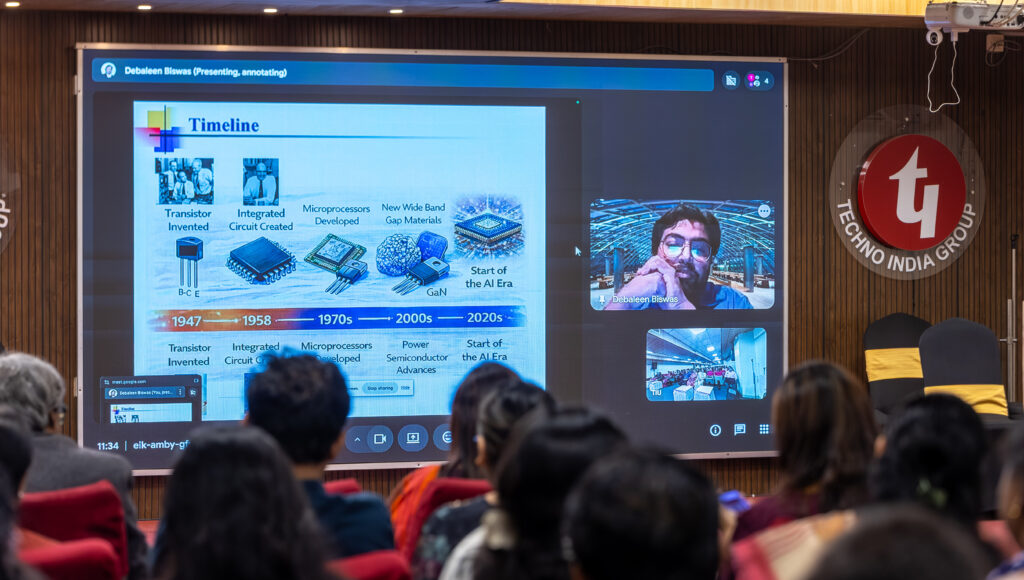
Dr. Debaleen Biswas offered insights into advanced semiconductor research, stating, “I will briefly share our recent research activities on next-generation semiconductor platforms for electronics, photonics, and quantum systems.” Explaining the basics, he said, “What is a semiconductor? As the name suggests, it has conductivity between a conductor and an insulator,” adding that “materials like silicon, germanium, gallium nitride, and gallium arsenide can be engineered into N-type and P-type forms to fabricate devices and integrated circuits.” Tracing its evolution, he noted, “The journey began in 1947 with the invention of the transistor by John Bardeen and Walter Brattain,” emphasizing that today “semiconductors form the backbone of AI, high-end computing, electric vehicles, smart grids, medical diagnostics, satellite communication, and space systems.” He concluded by highlighting the future scope of gallium nitride for high-power and 5G/6G applications.
Dr. Arindam Dey, brought a human-centered perspective to the celebration, sharing, “I’m truly happy to be here and grateful for the invitation.” Speaking about his 17-year journey in extended reality, he explained, “I’ve been working on AR and VR, focusing on making these systems adaptive.” Drawing from everyday life, he observed, “The same experience can feel completely different to different people,” emphasizing that biologically and cognitively we respond uniquely to identical stimuli. Pointing out a limitation in current technology, he noted that most digital interfaces are “one-size-fits-all.” Highlighting the future direction of his research, he said, “The next frontier is adaptive extended reality — systems that can sense physiological and cognitive signals and adjust in real time.” Concluding with vision and clarity, he described the goal as moving “From static virtual worlds to intelligent, responsive realities,” redefining how humans interact with technology.
Dr. Uttpal Chattopadhyay delivered an engaging lecture emphasizing the dynamic nature of science, stating, “Newton’s laws are not invalid; they work with extraordinary accuracy — but they are approximations,” and adding, “All scientific laws are approximations, and we keep pushing experiments to see where they might break down.” Explaining how quantum mechanics emerged when classical physics seemed complete, he cited landmark interference experiments — including findings that even Richard Feynman once considered experimentally impossible. Highlighting that physics advances through verification, not belief, he concluded, “The essence of quantum mechanics lies in superposition and interference,” underscoring the spirit of relentless questioning that defines true scientific inquiry.
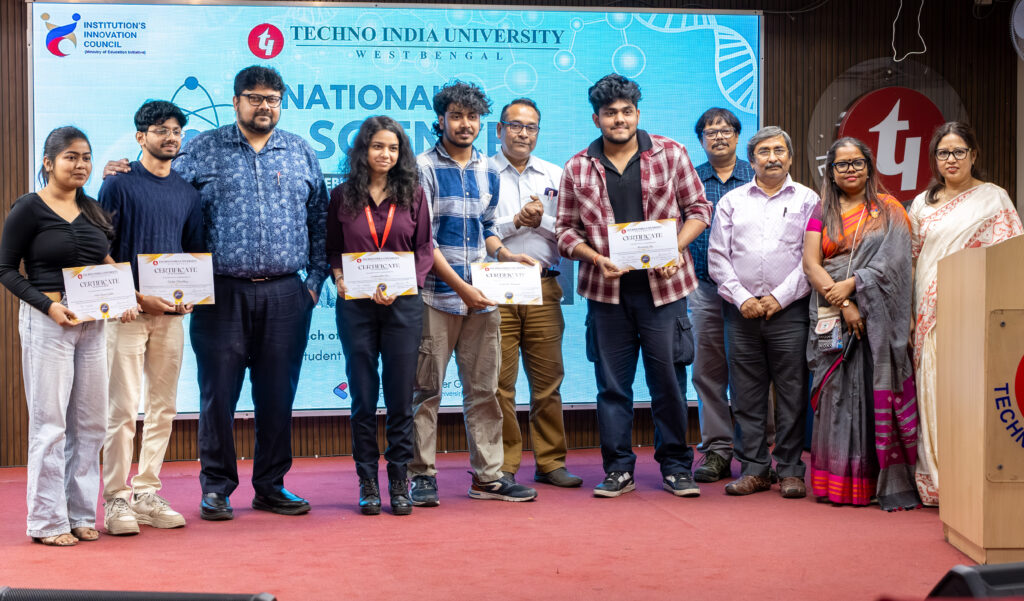
The event was graced by the esteemed presence of Prof. Ishan Ghosh, Head of Administration; Prof. (Dr.) Samiran Chattopadhyay, Vice-Chancellor; and Dr. Rina Paladhi, Director, Techno India Group, along with other respected faculty members whose encouragement and support added immense value to the celebration.
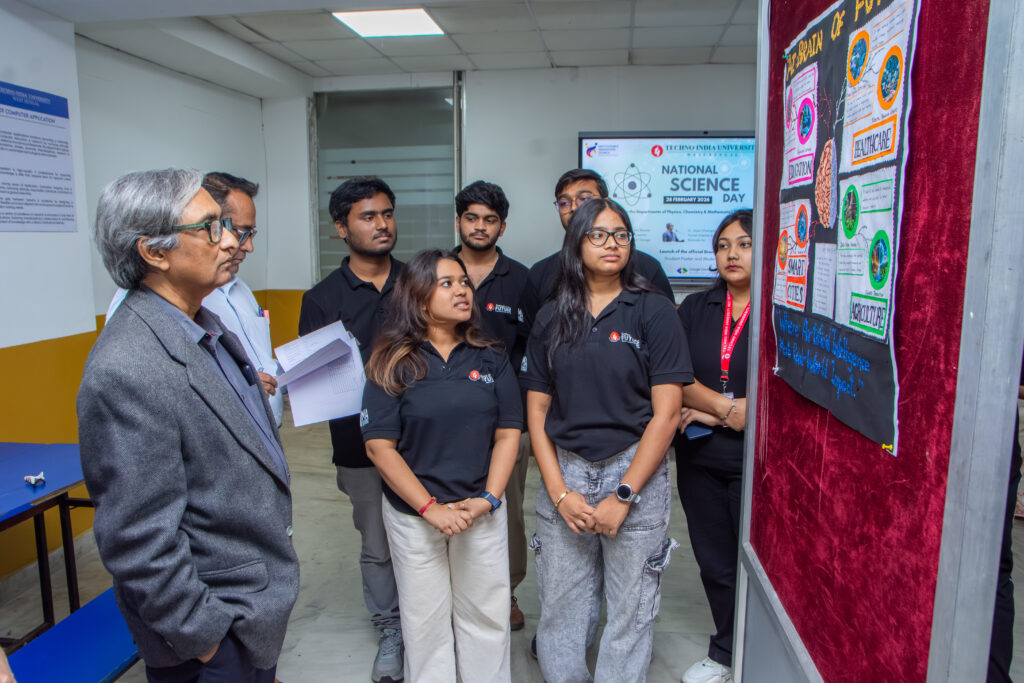
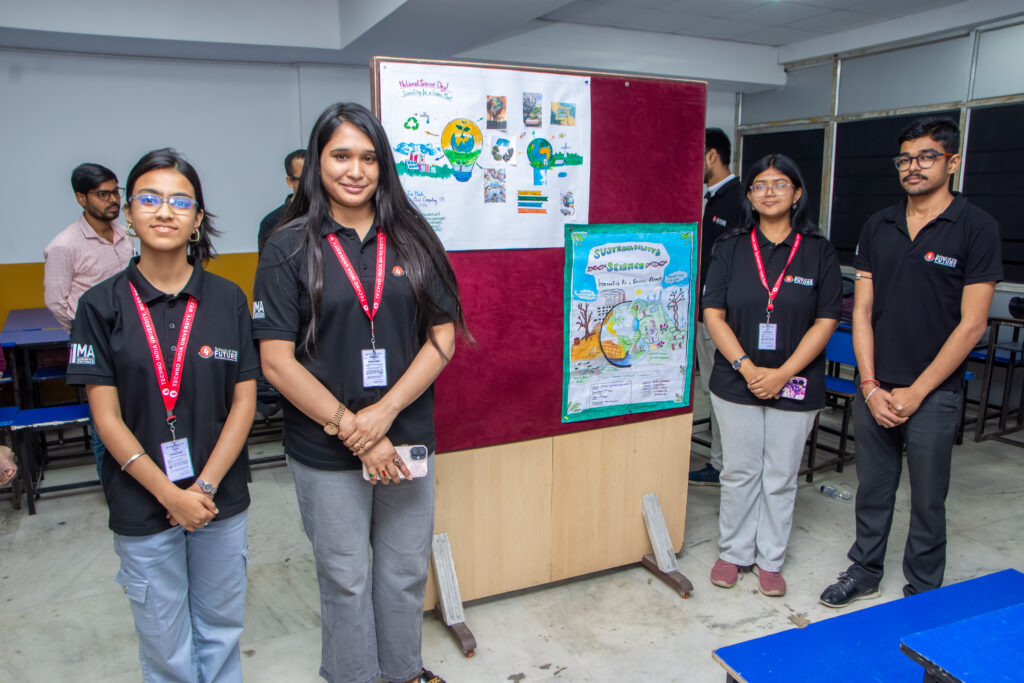
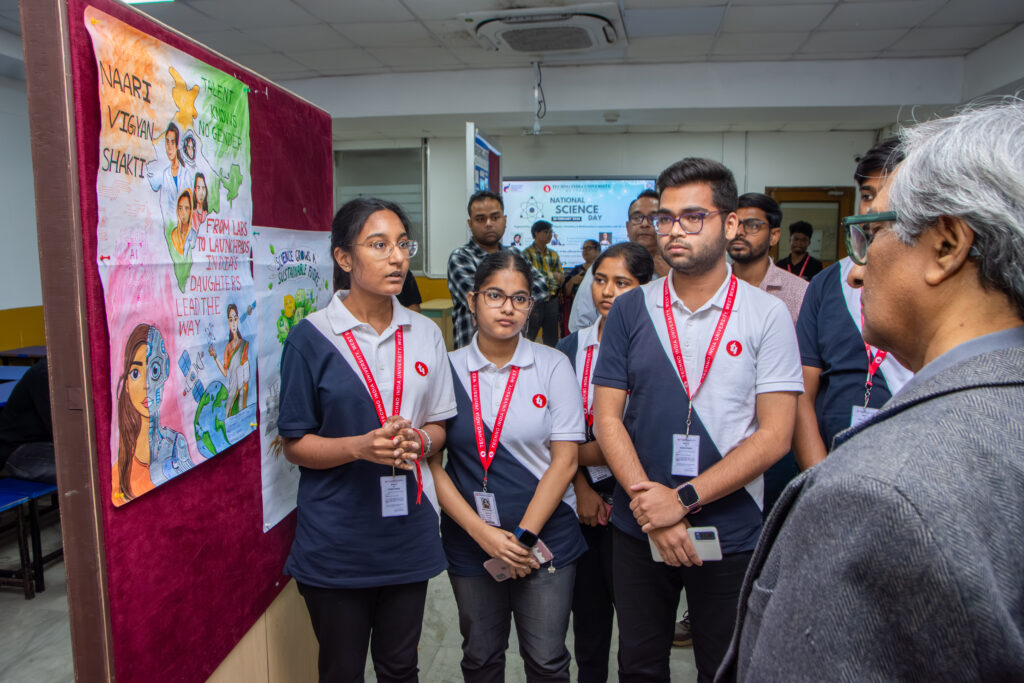
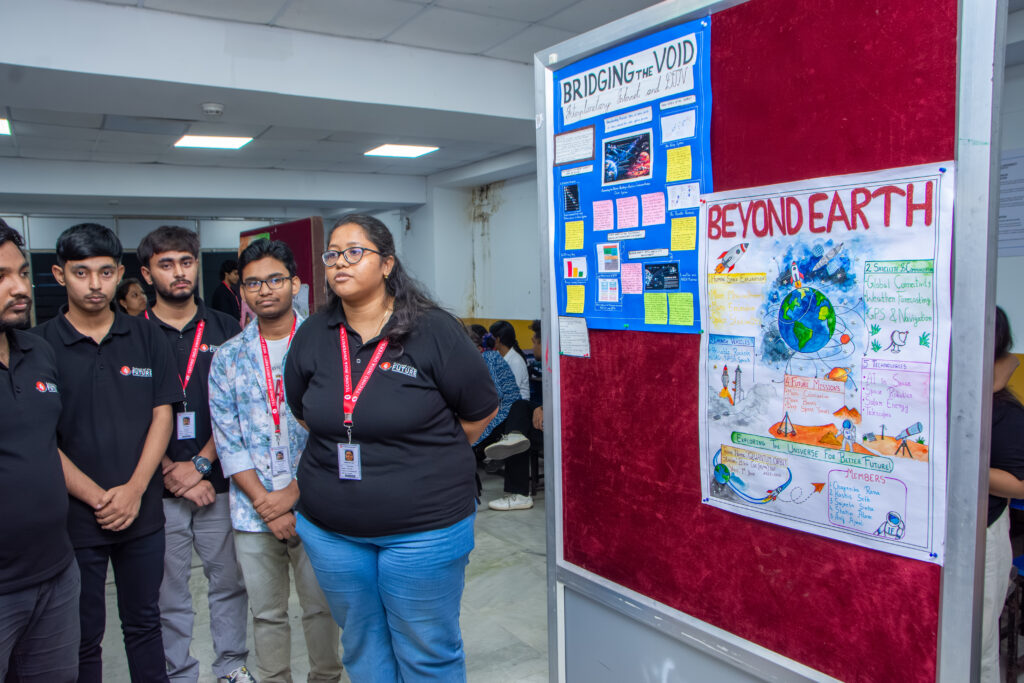
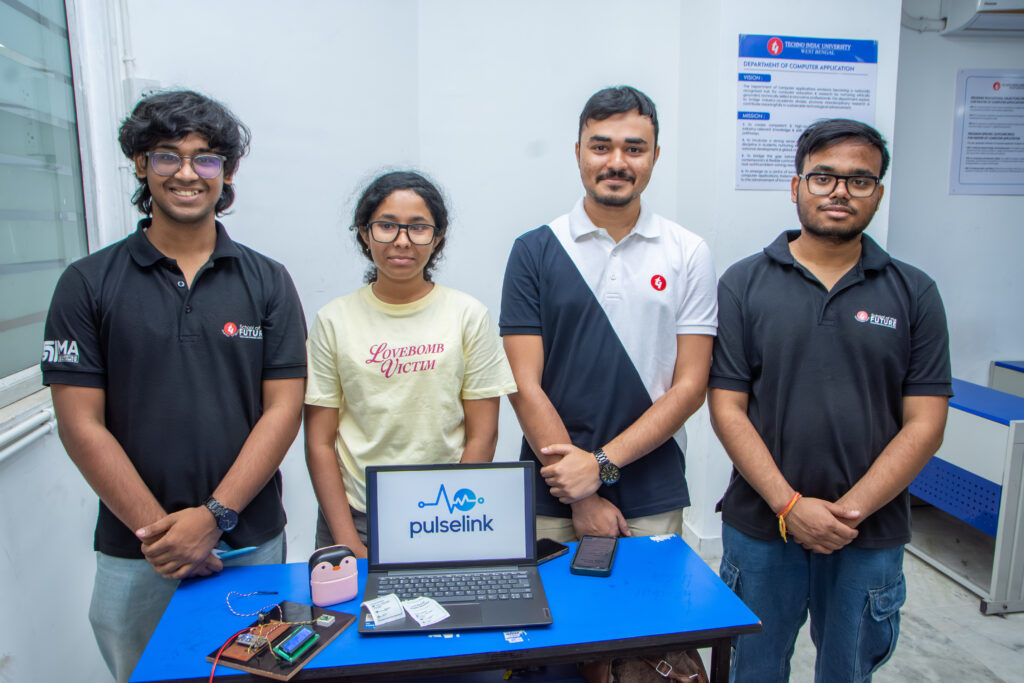
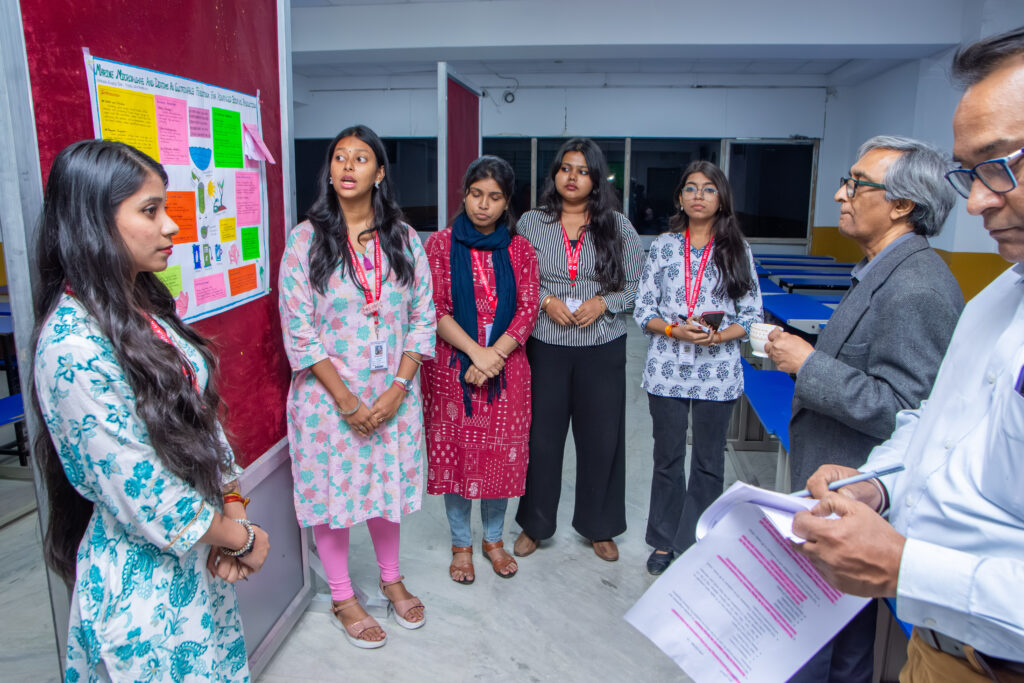
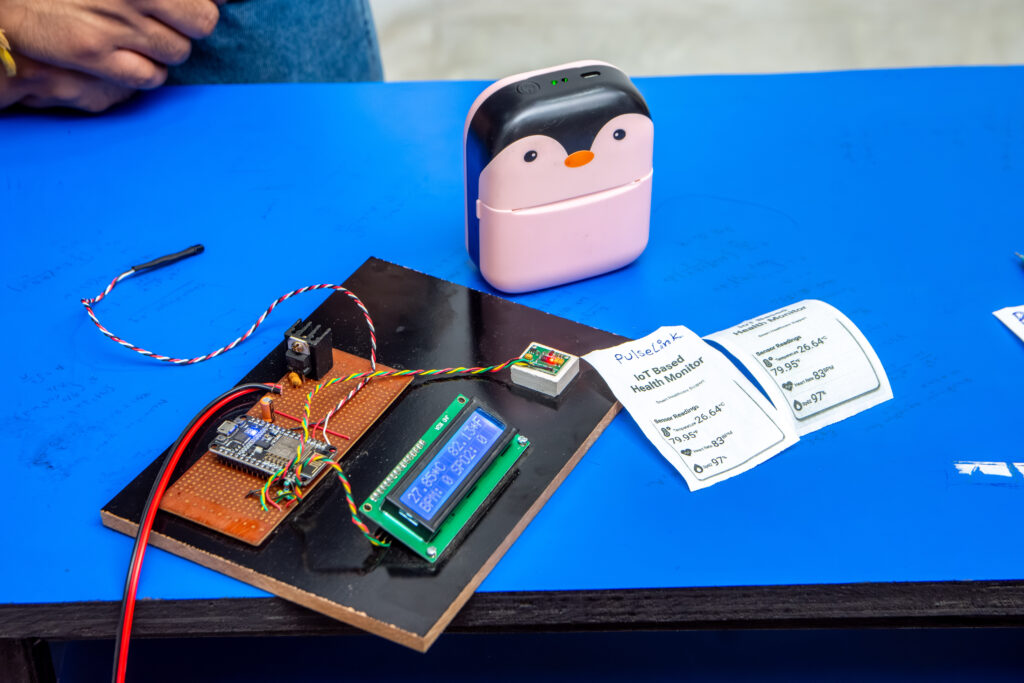
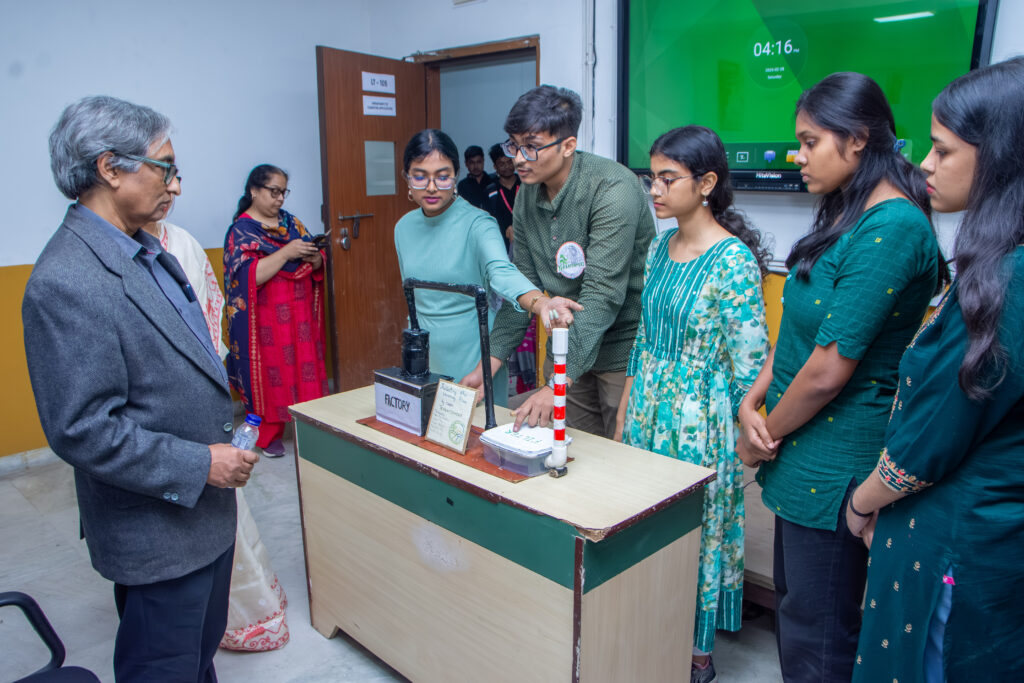
The celebration continued with engaging student presentations that highlighted innovative ideas and thoughtful reflections on scientific concepts. The students confidently shared their perspectives, demonstrating curiosity, research interest, and a deep appreciation for the role of science in shaping the future.
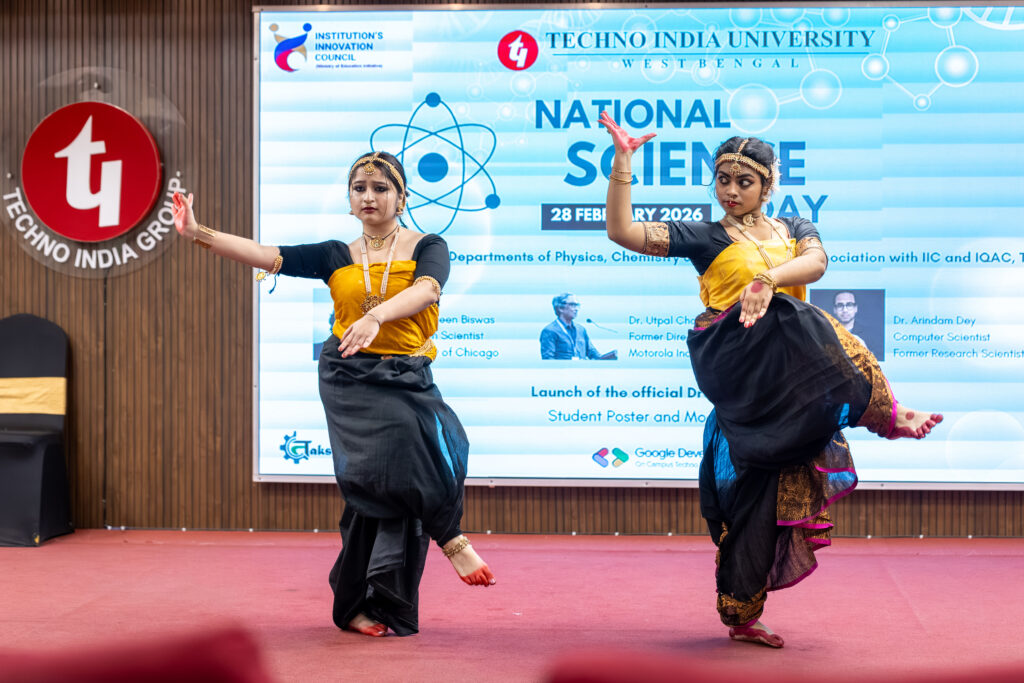
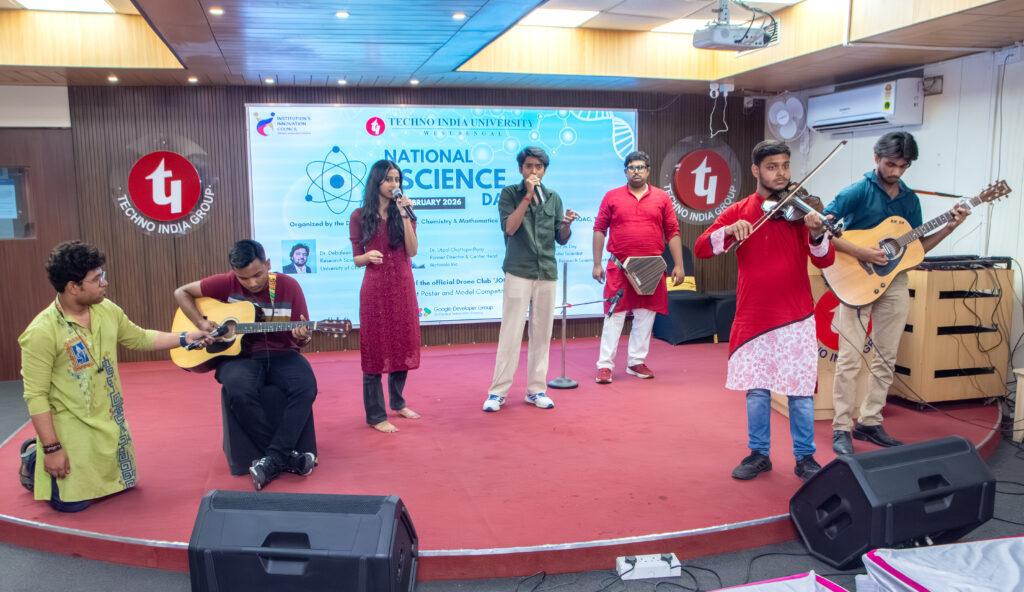
The event also featured a vibrant cultural segment that added a creative dimension to the celebration. Through music, dance, and artistic expression, students beautifully blended science with culture, reflecting the enthusiasm, talent, and collective spirit of the campus community and making the National Science Day celebration both intellectually enriching and culturally memorable.
The celebration of National Science Day 2026 drew to a meaningful close, leaving behind a spirit of curiosity and renewed determination. The insightful addresses by distinguished speakers, the emphasis on foundational sciences, and the launch of the Drone Club together reflected the institution’s commitment to blending tradition with innovation. The event not only honored the legacy of scientific discovery but also inspired students to think critically, question boldly, and innovate responsibly. It stood as a reminder that the pursuit of knowledge is an ongoing journey — one that empowers young minds to shape a brighter, more technologically advanced, and socially responsible future.