
Choosing the right city and the right institute for your MBA in Finance is one of the most important decisions of your career, and Kolkata has quietly become one of eastern India’s strongest contenders for management education. With a growing number of AICTE-approved business schools, industry tie-ups with global names like IBM and Google Cloud, and placement packages that now rival metro cities, the city is no longer a “second choice” for serious finance aspirants. This blog breaks down what makes Kolkata’s MBA finance programs worth considering, what to look for in a business school, and how to actually plan your admission.
Why Kolkata Is Emerging as a Strong Hub for MBA Admission
Kolkata’s business education ecosystem has grown significantly over the last decade. According to data from the All India Council for Technical Education (AICTE), West Bengal hosts a substantial cluster of AICTE-approved management institutes, many of which have modernised their curriculum to include AI, data analytics, and business analytics alongside traditional finance coursework. This shift matters because recruiters today are increasingly looking for finance graduates who can also work with data tools, not just balance sheets.
The Cost Advantage Without Compromising Quality
One practical reason Kolkata attracts MBA aspirants from across eastern and northeastern India is affordability. Tuition and living costs in Kolkata are considerably lower than in Mumbai, Delhi, or Bangalore, while top business schools in the city still offer placement packages, industry partnerships, and faculty credentials comparable to many tier-1 metro institutes. For students evaluating return on investment, this cost-to-outcome ratio is a significant factor.
What to Look for in a Top MBA College in Kolkata
Not every business school in Kolkata offers the same depth of finance specialization or industry exposure. Before shortlisting, here’s what should be on your checklist.
AICTE Approval and Accreditation
Always verify that the MBA in Finance program you’re considering is AICTE-approved. This isn’t just a formality, it determines whether your degree is recognised for government jobs, further academic pursuits, and certain regulatory finance roles like banking and insurance positions.
Industry Partnerships That Go Beyond Guest Lectures
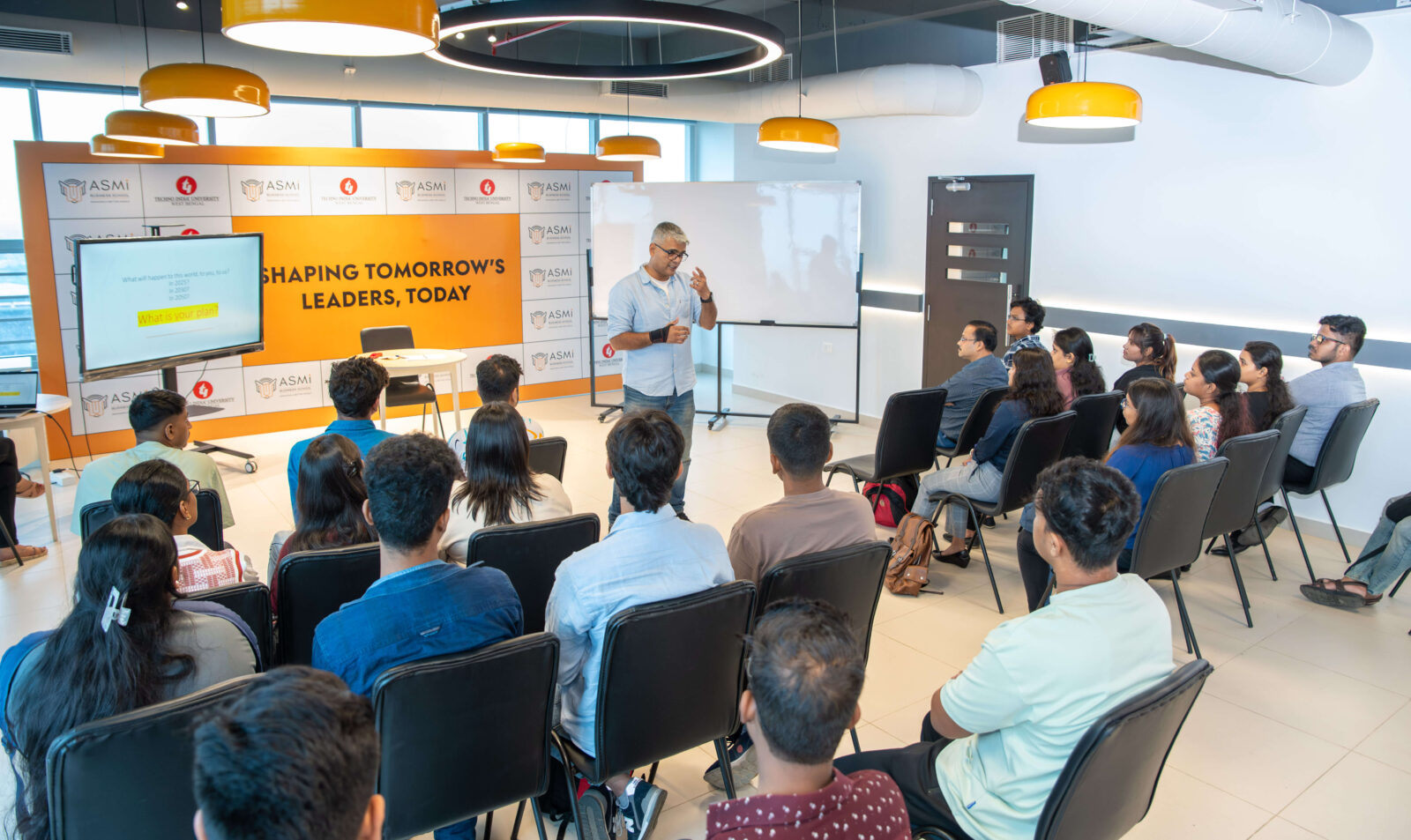
A genuinely strong program doesn’t just bring in industry speakers occasionally, it builds the curriculum around live industry tools and case studies. For example, ASMi Business School, part of Techno India University and located at Godrej Genesis in Kolkata, has built its MBA in Finance and other specializations around active partnerships with IBM and Google Cloud, giving students hands-on exposure to real-world analytics platforms used by actual finance and consulting teams.
Placement Strength and Salary Benchmarks
Placement data is one of the most reliable indicators of how seriously a business school invests in its students’ careers. At ASMi Business School, recent placement statistics show a highest package of ₹20.38 LPA, an average package of ₹14.20 LPA, and a median package of ₹13.50 LPA, figures that compare favourably with several established business schools across India. Recent placements have included roles at firms like EY, E-Intellisense, and Lifestyle International Pvt. Ltd., reflecting a placement network that spans both core finance and broader corporate roles.
Global Exposure Through Study Tours
International exposure has become a differentiator for top MBA programs. ASMi Business School’s MBA cohort recently completed a study tour to Malaysia, engaging with industry experts at INTI International University and visiting business operations like the Royal Selangor Pewter and Barleys Chocolate factories. Tours like this blend classroom theory with real exposure to global business operations, something that’s increasingly valued by recruiters evaluating candidates for roles with international clients.
MBA in Finance: Program Structure and Specialization Depth
A full-time MBA in Finance typically runs for 2 years and sits alongside other specializations such as Marketing, HR, Technology, and Entrepreneurship, allowing students some flexibility if their interests shift during the first year. At institutes like ASMi Business School, the finance specialization is built on:
- AICTE-approved curriculum with structured core finance modules
- IBM-powered learning tools for applied financial analytics
- Real-world projects that simulate actual business and investment decision-making
- Experienced faculty and mentors drawn from both academia and industry
- A strong placement network with dedicated finance-sector recruiters
For students who are still completing undergraduate studies, a BBA with a Business Analytics specialization (a 4-year program, also IBM-partnered) can serve as a strong feeder pathway into an MBA in Finance later, since it builds the data literacy that finance recruiters now expect.
Executive Education: An Alternative Path for Working Professionals
Not everyone considering an MBA in Finance is fresh out of undergrad. For CXOs, senior managers, entrepreneurs, and growth-minded professionals, Executive Education programs offer a way to upgrade strategic and financial leadership skills without stepping away from a career. These programs are typically structured with:
- Industry-led faculty and personalised learning experiences
- Immersive, case-based sessions with peer collaboration
- Flexible modules designed around working professionals’ schedules
- A formal certification recognising the completed coursework
This format has grown in relevance as more professionals seek to reskill mid-career rather than take a full break from employment, a trend reflected in the rising number of executive-format programs launched by Indian B-schools over the past five years.
How the MBA Admission Process Typically Works in Kolkata
If you’re planning your MBA admission in Kolkata, most reputed business schools, including ASMi Business School, follow a fairly standard process:
- Fill up the application with your academic and personal details
- Upload your documents for verification
- Authentication of submitted documents and eligibility
- Interview with a counsellor to assess fit and career goals
- Provisional offer letter issued upon successful evaluation
- Programme begins, with onboarding and orientation sessions
Applicants are also often given access to preparatory resources, such as MBA interview strategy guides, career planning advice, personal branding tips, and time management templates, to help them transition smoothly into the program.
Frequently Asked Questions
What is the average salary after an MBA in Finance from a top Kolkata business school?
Based on recent placement data from leading Kolkata business schools, average packages for MBA Finance graduates range between ₹13 LPA and ₹14 LPA, with top performers securing offers above ₹20 LPA.
Is an MBA in Finance from Kolkata recognised nationally?
Yes, as long as the program is AICTE-approved, the degree carries the same national recognition as MBA programs from other AICTE-approved institutes across India.
Can working professionals pursue an MBA in Finance in Kolkata without quitting their job?
Yes. Executive Education programs are specifically designed for working professionals, offering flexible, part-time formats that allow them to build advanced finance and leadership skills without a career break.
What makes a business school in Kolkata stand out for finance specialization?
Look for AICTE approval, active industry partnerships (such as IBM or Google Cloud), strong placement statistics, real-world project work, and global exposure opportunities like international study tours.
Final Thoughts
Kolkata’s business education landscape has matured into a genuinely competitive option for students and professionals pursuing an MBA in Finance, backed by AICTE-approved curricula, strong industry partnerships, and placement outcomes that hold up well against bigger metro cities. Whether you’re a fresh graduate evaluating a full-time MBA or a working professional considering Executive Education, the city now offers structured, well-supported pathways into finance leadership roles. If you’re exploring your MBA admission in Kolkata, take the time to compare placement data, faculty credentials, and industry exposure across institutes, these factors will matter far more in the long run than rankings alone.