
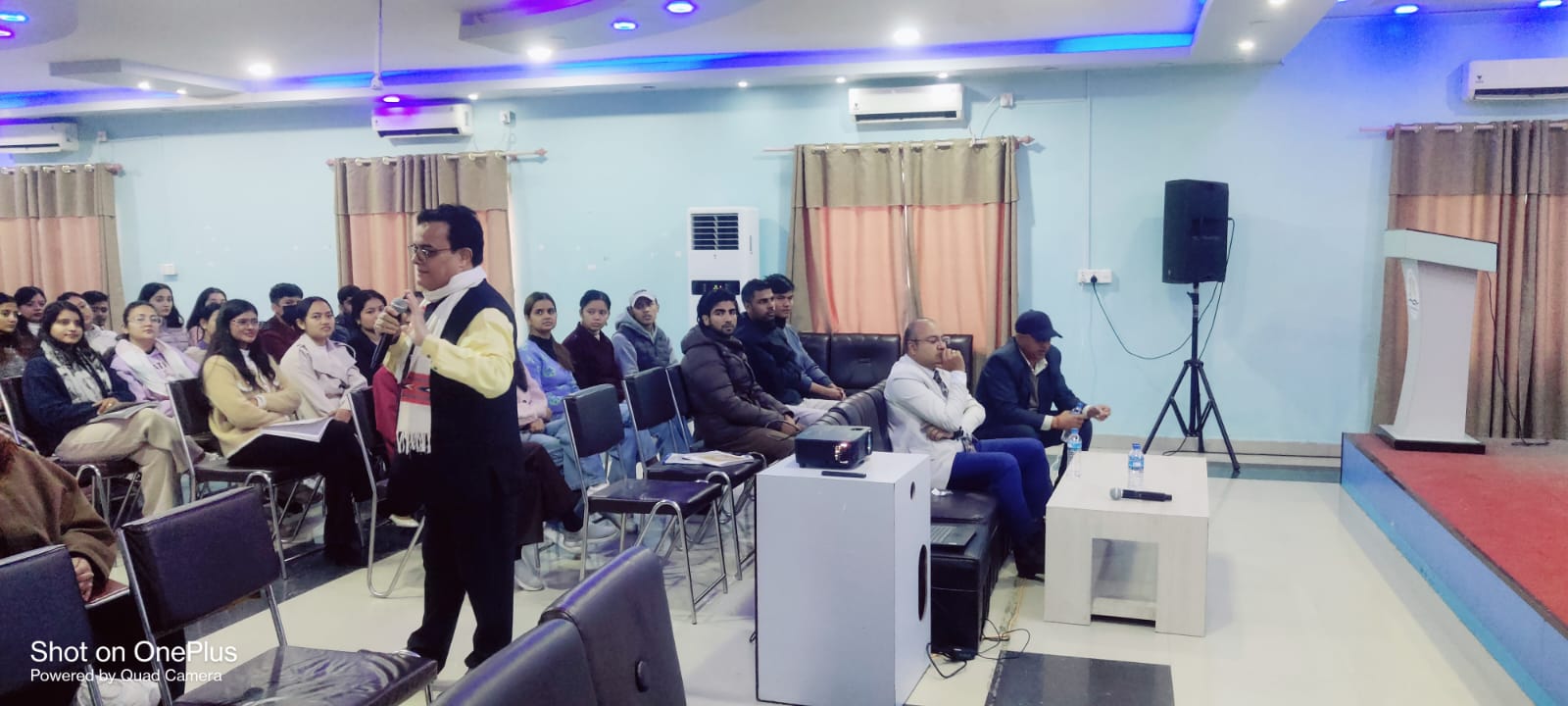
As Artificial Intelligence (AI) continues to reshape the global business landscape, the conversation is no longer limited to how AI is used, but how responsibly it is applied. This idea formed the core of an engaging and thought-provoking interaction with BBA final semester students at Boston International College, Chitwan, Nepal, during a recent academic session held in collaboration with Techno India University.
The session was led by Prof. Ujjwal K. Chowdhury, Director, Techno India Group & Principal Adviser, Techno India University, who spoke on the use and utility of AI across every specialisation of Business Management, while strongly emphasising the growing importance of ethical AI in education and professional decision-making.
AI Across Business Specialisations: Practical, Powerful, and Present
The interaction focused on how AI is no longer a futuristic concept but a day-to-day business enabler. Students explored real-world applications of AI across multiple management domains, including:
- Marketing & Sales – Consumer behaviour analysis, personalised campaigns, and predictive market trends
- Finance & Accounting – Risk assessment, fraud detection, financial forecasting, and automation
- Human Resource Management – Talent acquisition, performance analytics, and employee engagement tools
- Operations & Supply Chain – Smart logistics, demand forecasting, and process optimisation
- Entrepreneurship & Strategy – Business intelligence, startup validation, and data-driven decision-making
The discussion helped students understand how AI complements managerial insight rather than replacing human judgment.
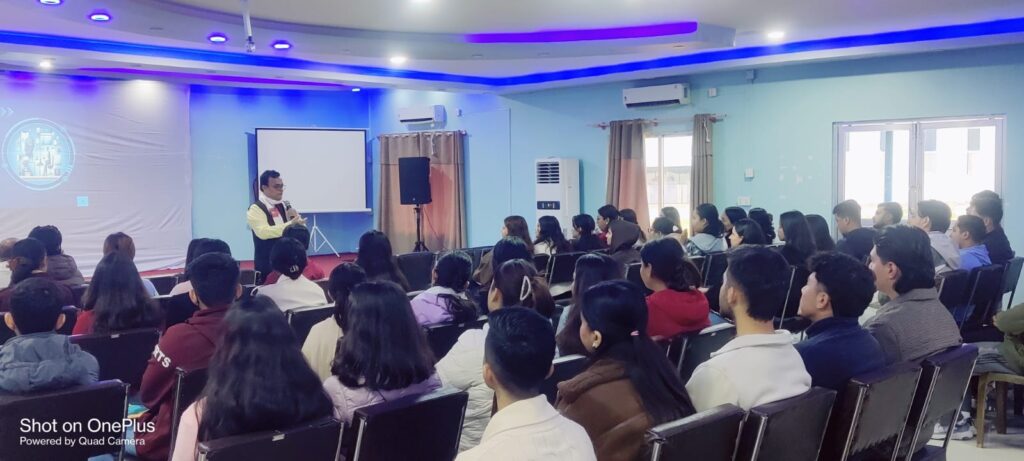
The interaction adopted a human-centric approach to AI, highlighting that qualities such as empathy, creativity, critical thinking, and ethical reasoning remain irreplaceable. AI was positioned as a strategic tool—one that enhances decision-making when guided by strong human values.
Students actively participated, sharing their aspirations and concerns about entering an AI-driven job market, making the session both interactive and relatable.
The engagement also highlighted the value of cross-border academic collaboration, showcasing how shared conversations on AI, ethics, and business education transcend geographical boundaries. Such interactions contribute meaningfully to preparing students for global careers in an increasingly interconnected digital economy.
As AI continues to influence every aspect of business management, it is essential that future professionals are equipped not only with technical skills, but also with ethical awareness and social responsibility. Sessions like these ensure that students step into their careers as informed, thoughtful, and responsible leaders—ready to harness AI for sustainable and inclusive growth.