
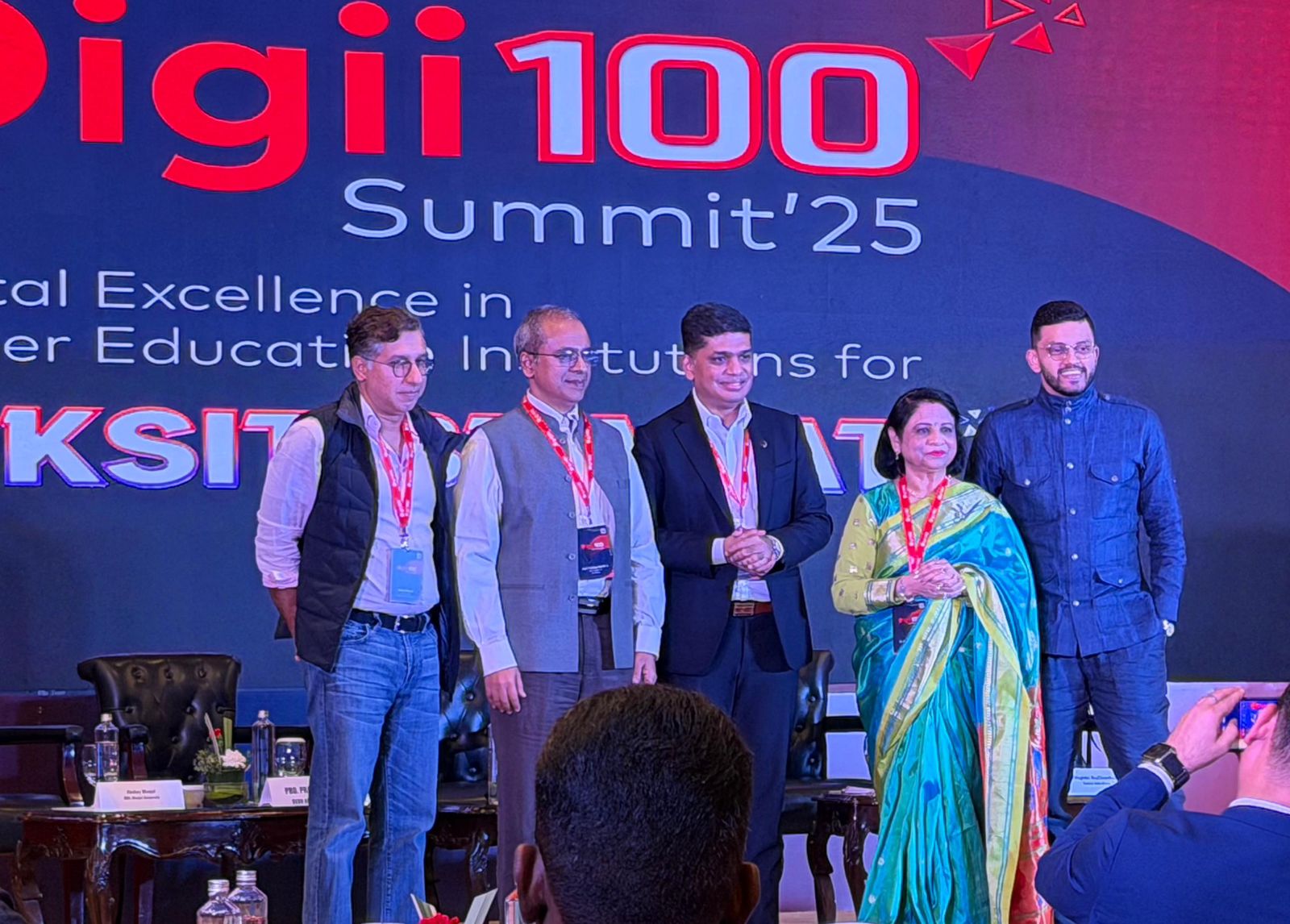
At the Digii100 Summit’25, a forum centred on Digital Excellence in Higher Education Institutions for Viksit Bharat, discussions moved beyond digital tools and infrastructure to examine a deeper transformation—the changing relationship between learners, educators, and the world they inhabit. Among the most compelling voices at the summit was Meghdut RoyChowdhury, Chief Innovation Officer of Techno India Group, whose reflections challenged conventional ideas of education in an increasingly interface-driven era.
“I have never met them. They exist online,” RoyChowdhury observed, describing a reality where relationships are often formed and sustained entirely through the internet. “We know it’s a real person, but the whole relationship exists online.” According to him, this shift is not limited to a particular age group; rather, it reflects a broader transition shaped by digital interfaces that redefine interaction, identity, and expectations.
He further explained how this digital upbringing influences the way young learners perceive education. “They’ve only played games. They’ve played Roblox,” he said, pointing out how progress in gaming is understood as a continuous series of upgrades. “So they are also looking at education as a series of upgrades.” Degrees and qualifications are no longer seen as final destinations but as evolving checkpoints in a longer journey. Emphasising the responsibility of educators, he added, “If we as educators are able to provide that… we are going to do very well. If not, they are the ones sitting on the other side of the table very soon.”
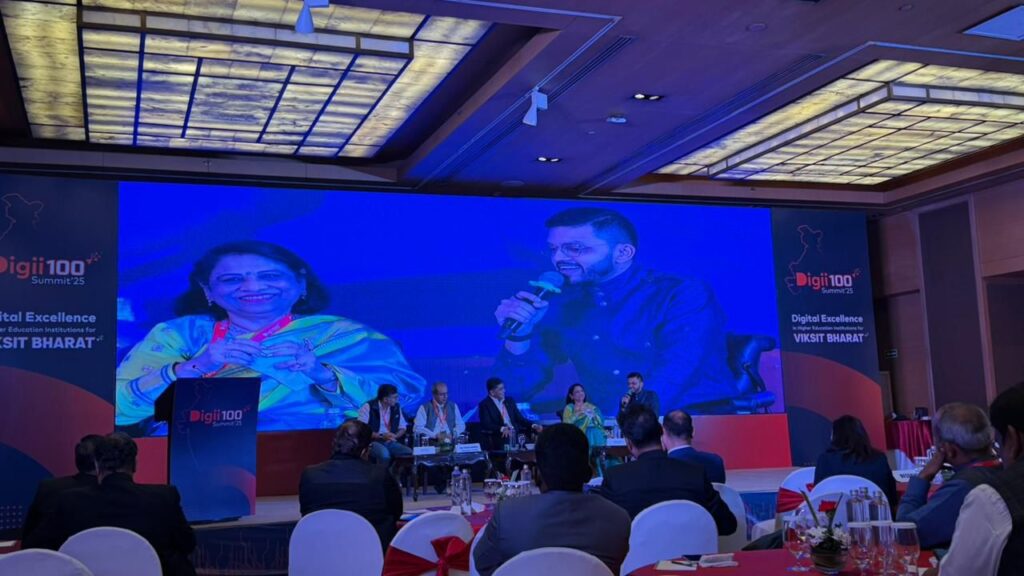

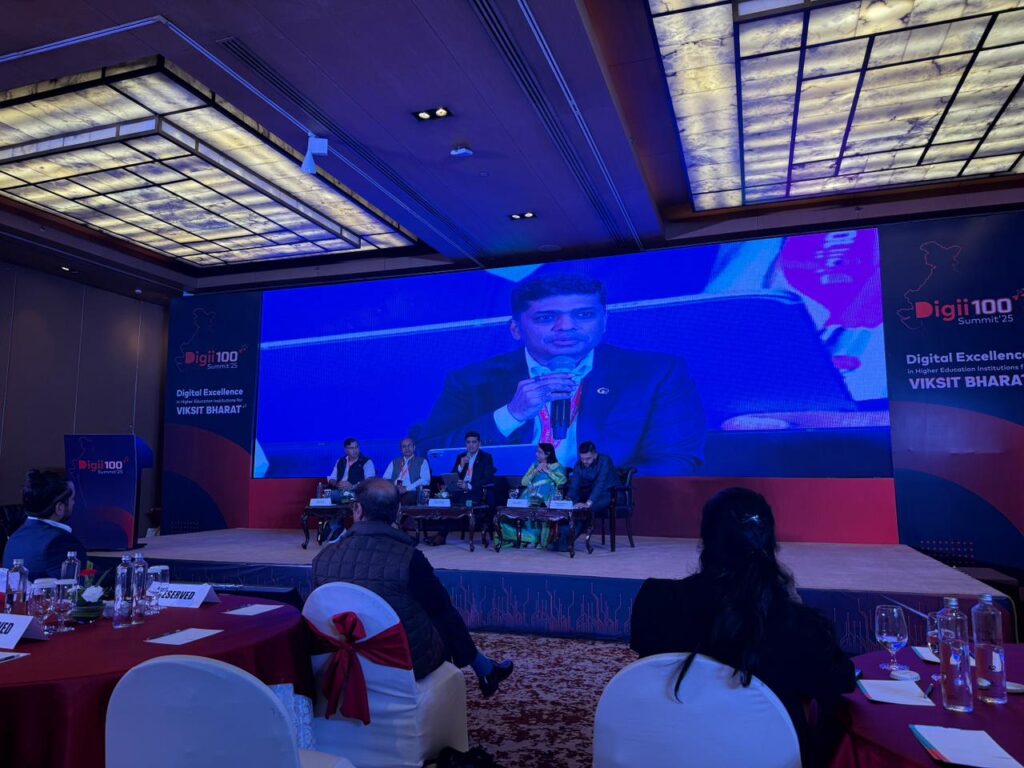
Bringing a personal anecdote into the conversation, RoyChowdhury spoke about his young “ninja team,” largely in the 22–26 age group, who run the organisation. Recalling a recent visit to their new office space inside OffbeatCCU, his experiential learning centre, he shared his surprise at what he encountered. “I walk in and I see the entire office filled with toys—plushies, hot wheels, stuffed animals,” he said. “My first question was, do these guys use computers to learn or what is going on here?”
Amused and curious, he later shared a video of the space online, questioning whether he had misunderstood Gen Z altogether. The response, however, was revealing. “These are our emotional support toys,” the team explained. Reflecting on the moment, RoyChowdhury remarked, “The world is absurd. All known social structures are falling apart.” For many young professionals, emotional comfort and creative spaces are essential coping mechanisms in an uncertain world.
The anecdote underscored a broader reality: today’s learners and professionals are not disengaged, but expressive in new ways. They blend emotion, creativity, and productivity, reshaping traditional notions of work and learning. RoyChowdhury’s reflections served as a reminder that education must evolve with this changing mindset.
As highlighted at the Digii100 Summit’25, the learners being shaped today will soon become decision-makers and leaders. Understanding how they think, learn, and cope is no longer optional—it is central to building an education system that remains relevant, responsive, and human in a rapidly transforming world.