
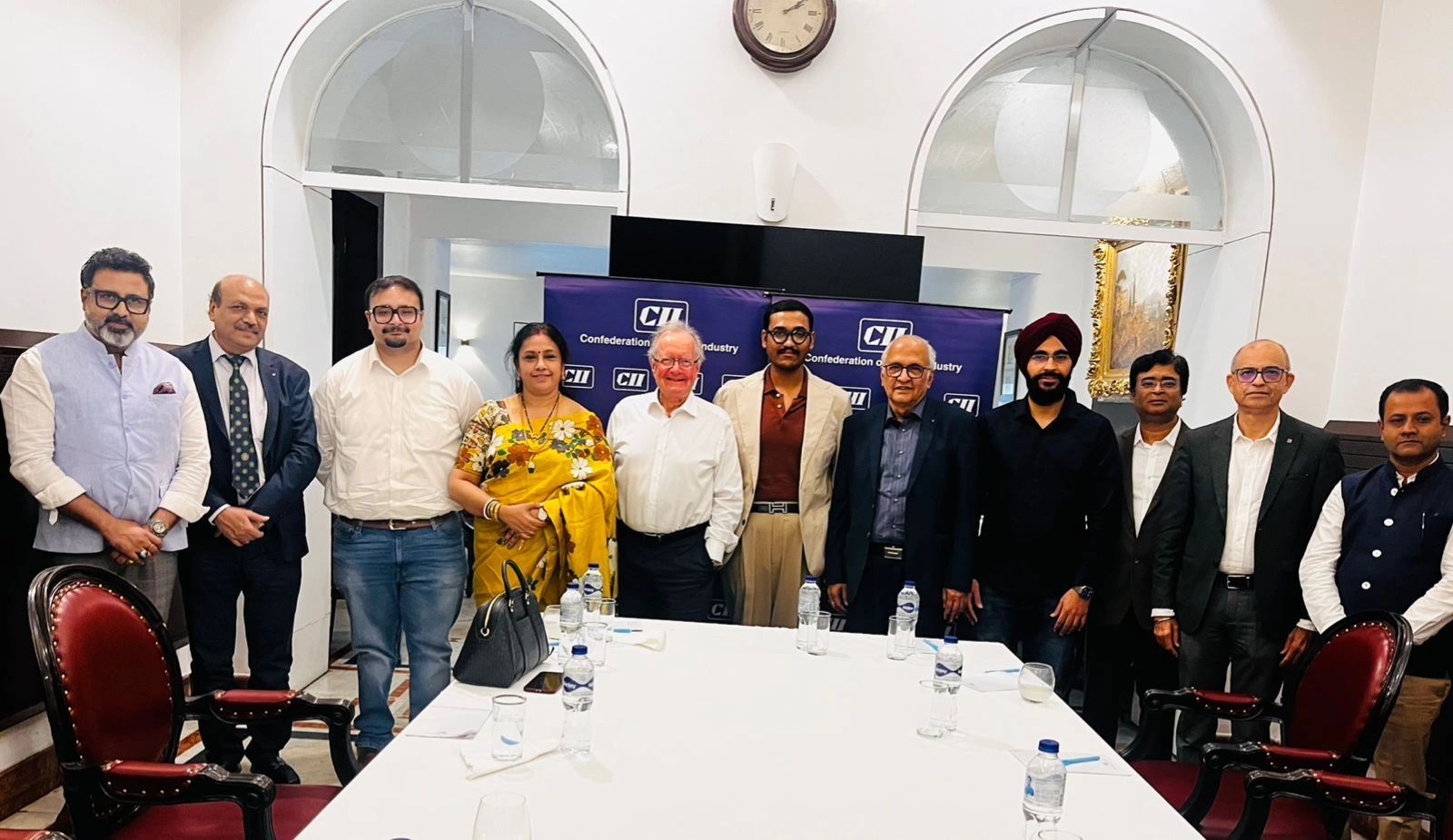
The future of education lies in collaboration, global exposure, and meaningful learning experiences for students. Reinforcing this vision, Manoshi Roychowdhury, Co-Chairperson of Techno India Group, recently participated in an exclusive closed-door luncheon hosted by the Confederation of Indian Industry Eastern Region under the leadership of Prithish Chowdhary.
The interaction brought together distinguished voices from academia and industry, including Dr. John A. Quelch, Executive Vice Chancellor of Duke Kunshan University. The discussion focused on how institutions can prepare students for a rapidly changing and globally connected world.
For Manoshi Roychowdhury, the conversation was not simply about international collaborations or exchange programmes. It was about creating opportunities that genuinely transform the student learning experience. The dialogue highlighted the growing importance of classrooms that reflect cultural diversity, curricula that evolve with industry demands, and educational systems that encourage students to think beyond boundaries.



The meeting also underlined a significant shift in higher education today – global learning is no longer a distant aspiration. It has become an immediate responsibility for institutions aiming to prepare students for the future. Through such discussions, Techno India Group continues to strengthen its commitment to innovation-driven and globally relevant education.
The exchange of ideas between academic leaders and industry experts created a meaningful platform to discuss how education can become more practical, inclusive, and future-ready. From industry expectations to interdisciplinary learning, the dialogue emphasized the need for institutions to equip students not only with academic knowledge, but also with adaptability, creativity, and a global outlook.
As one of the leading educational groups in the country, Techno India Group has consistently focused on bridging the gap between classroom learning and real-world opportunities. Participation in forums like this reflects the institution’s larger vision of empowering students with exposure that extends across industries, ideas, and countries.
At the heart of the discussion remained one important question: How can education become more meaningful and empowering for young minds? The answer, as reflected through the dialogue, lies in building institutions that prepare students not just for careers, but for a world without boundaries.