
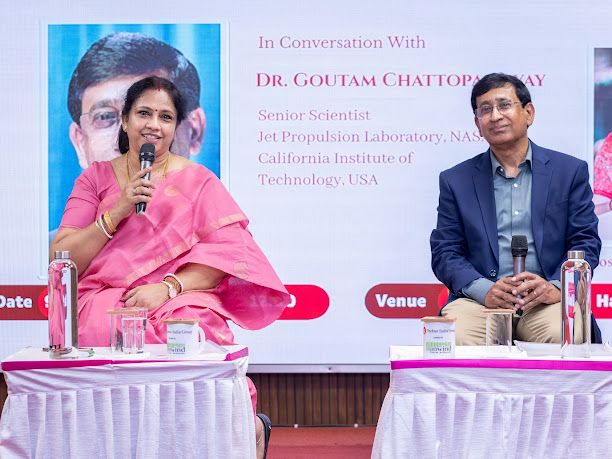
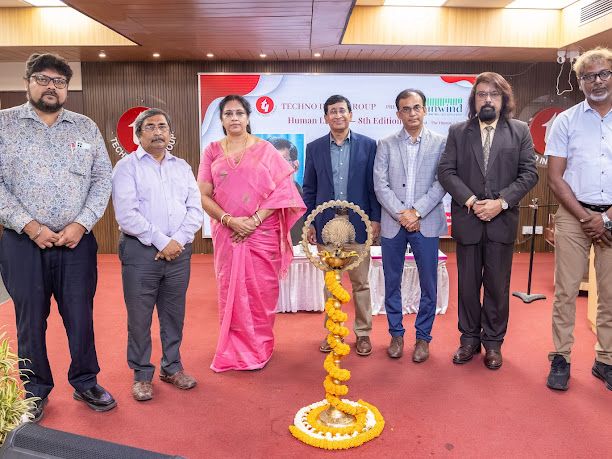
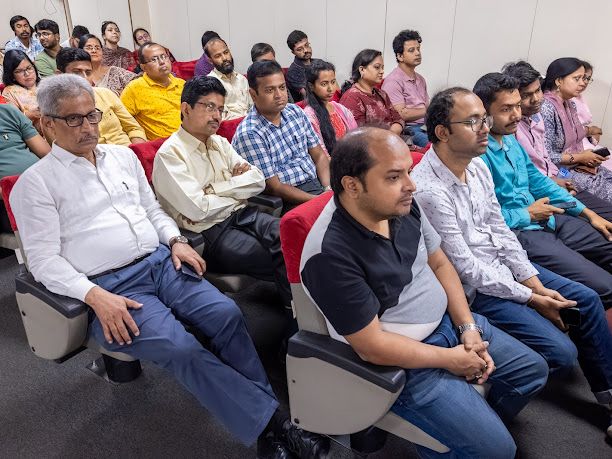
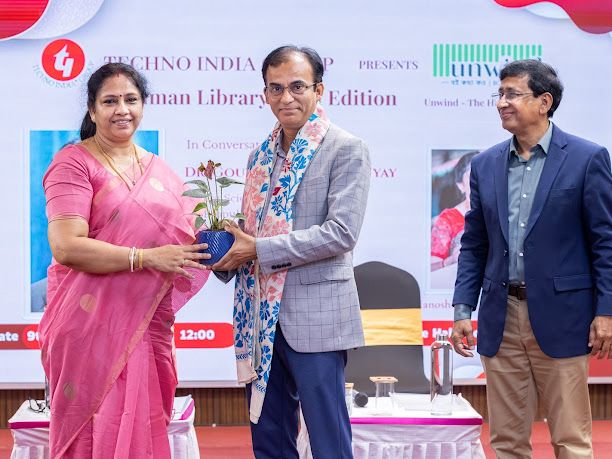
Every life carries a story, and often the most powerful lessons come not from textbooks but from real journeys of passion and perseverance. Embracing this spirit, Techno India University hosted the 8th Edition of the Human Library: “Unwind” on 9 March, where students of Techno Main Salt Lake and Techno India University witnessed an inspiring on-stage conversation between Prof. Manoshi Roy Chowdhury, Co-Chairperson of the Techno India Group, and renowned scientist Dr. Goutam Chattopadhyay.
Dr. Goutam Chattopadhyay, Senior scientist at NASA–Jet Propulsion Laboratory, California Institute of Technology, joined the conversation with Prof. Manoshi Roy Chowdhury, Co-Chairperson of the Techno India Group. The Human Library initiative, conceptualized by Prof. Roy Chowdhury, continues to create a unique platform where accomplished individuals share their personal journeys, struggles, and insights with students through candid conversations that bring real-life experiences closer to young minds.
The conversation began with Prof. RoyChowdhury sharing the fascinating story of how she first met Dr. Goutam Chattopadhyay—a meeting that felt almost serendipitous. Recalling the moment, she said, “I believe in the Almighty…” I was returning from a program at Delhi University, and the seat beside me in the flight was vacant. What initially appeared to be a simple coincidence soon turned into an engaging exchange when the person who occupied the seat introduced himself as Dr. Goutam Chattopadhyay. As their conversation unfolded during the flight, he spoke about his journey in space science and mentioned that he had spent over two decades working with NASA, contributing to research that explores the mysteries of the universe.
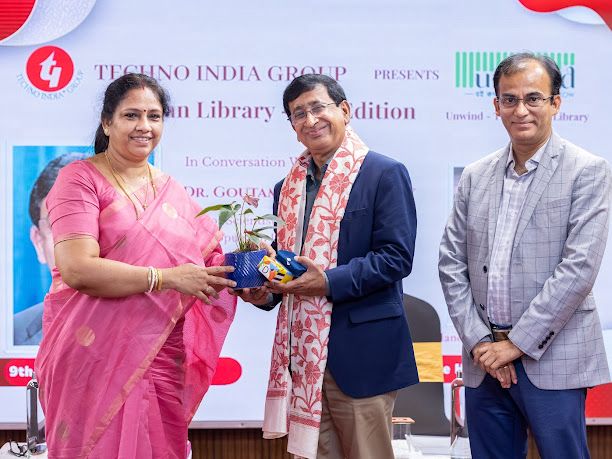
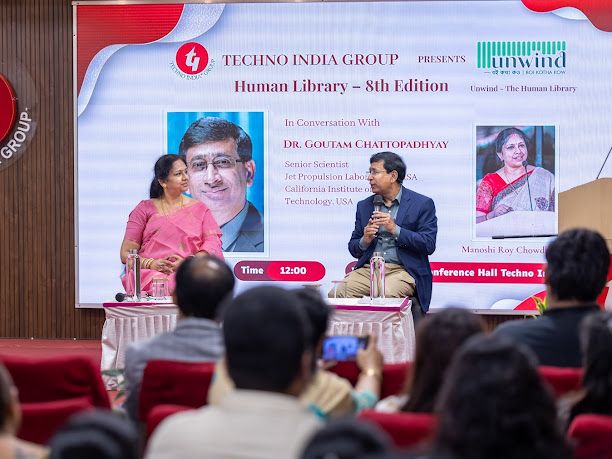
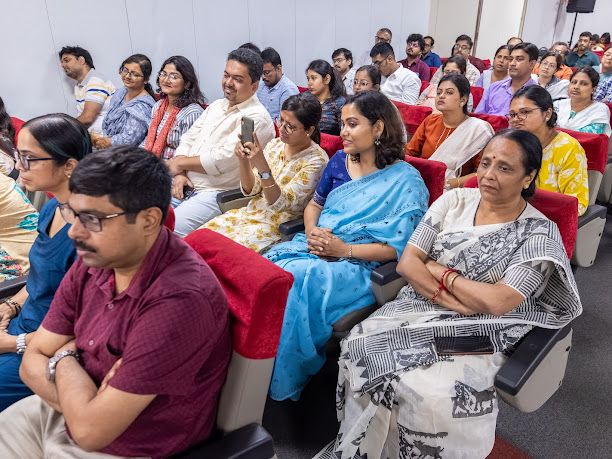
Reflecting on that encounter, Prof. Roy Chowdhury explained how moments like these inspire the vision behind the Human Library initiative—to bring individuals with remarkable journeys directly to students. As she expressed to the audience, “As soon as I meet such personalities whom our students look forward to as role models, I feel they should be here in our university campus to talk to you and motivate you.” Encouraging students to dream boldly and believe in their potential, she added with hope, “I don’t know whether somewhere ten years after I’ll be hearing one of your names in NASA.”
As the conversation moved forward, Dr. Goutam Chattopadhyay shared insights into his own life, speaking with honesty about the struggles that shaped his journey. Growing up in modest circumstances, he revealed that even basic academic resources were sometimes difficult to afford. Reflecting on those days, he said, “I could not buy books. My friends used to lend me their books so that I could study.” Despite these limitations, his curiosity for science remained strong, and that curiosity eventually guided him toward a career in research and space science.
During the discussion, Dr. Chattopadhyay emphasized that challenges and circumstances evolve over time, but perseverance remains the key to progress. Drawing from his own experiences and the challenges students have faced in recent years—including disruptions during the COVID-19 pandemic—he highlighted the importance of adaptability, resilience, and continuous learning.
Speaking about the essence of scientific exploration, he reminded students that uncertainty is an inherent part of research. “There is no guarantee of success. If success were guaranteed, it wouldn’t be called research.” he said, explaining that true discovery lies in exploring the unknown and asking questions that may not have immediate answers.
He also offered a glimpse into how scientific institutions like NASA approach both success and failure. According to him, every mission—whether it achieves its goals or not—becomes an opportunity to learn. “When the mission is over — whether it is successful or not — we sit down and think about what went well, what did not go well, and what we can learn from it,” he explained, highlighting the culture of reflection and improvement that drives scientific progress.
Addressing the emotional dimension of setbacks, Dr. Chattopadhyay acknowledged that failure can sometimes lead to moments of disappointment or self-doubt. Yet he encouraged students to view those moments differently. In his words, “Every day we fail, but we have to get up and think about what I have learned from it.” According to him, the ability to reflect and learn from mistakes builds resilience and helps individuals move forward with greater clarity and strength.
The conversation eventually shifted to one of the most intriguing questions in modern science – the possibility of life beyond Earth. Responding to the curiosity surrounding extraterrestrial life, Dr. Chattopadhyay clarified an important scientific reality: “We have not found any life outside of planet Earth, anywhere — not even a single cell.” He cautioned students against believing every claim about aliens circulating on the internet, emphasizing that credible scientific evidence has yet to confirm life beyond our planet.
At the same time, he spoke about the vastness of the universe and the ongoing scientific quest to explore it. With hundreds of billions of stars in a single galaxy and billions of galaxies across the universe, scientists continue to search for planets and environments where life might potentially exist. The probability, he explained, may not be zero—but discovering such life will require patience, advanced technology, and years of continued exploration.
As the conversation drew to a close, the session left students with more than just information—it offered perspective. Through stories of humble beginnings, curiosity, perseverance, and the courage to explore the unknown, Dr. Goutam Chattopadhyay’s journey reminded everyone that extraordinary paths often begin with simple questions and determination. The exchange between Prof. Manoshi Roy Chowdhury and Dr. Chattopadhyay transformed the Human Library into a space where ideas, experiences, and aspirations came alive. For the students in the audience, the message was clear: challenges may shape the journey, but curiosity, resilience, and the courage to dream can take one from borrowed books to the frontiers of space science.