
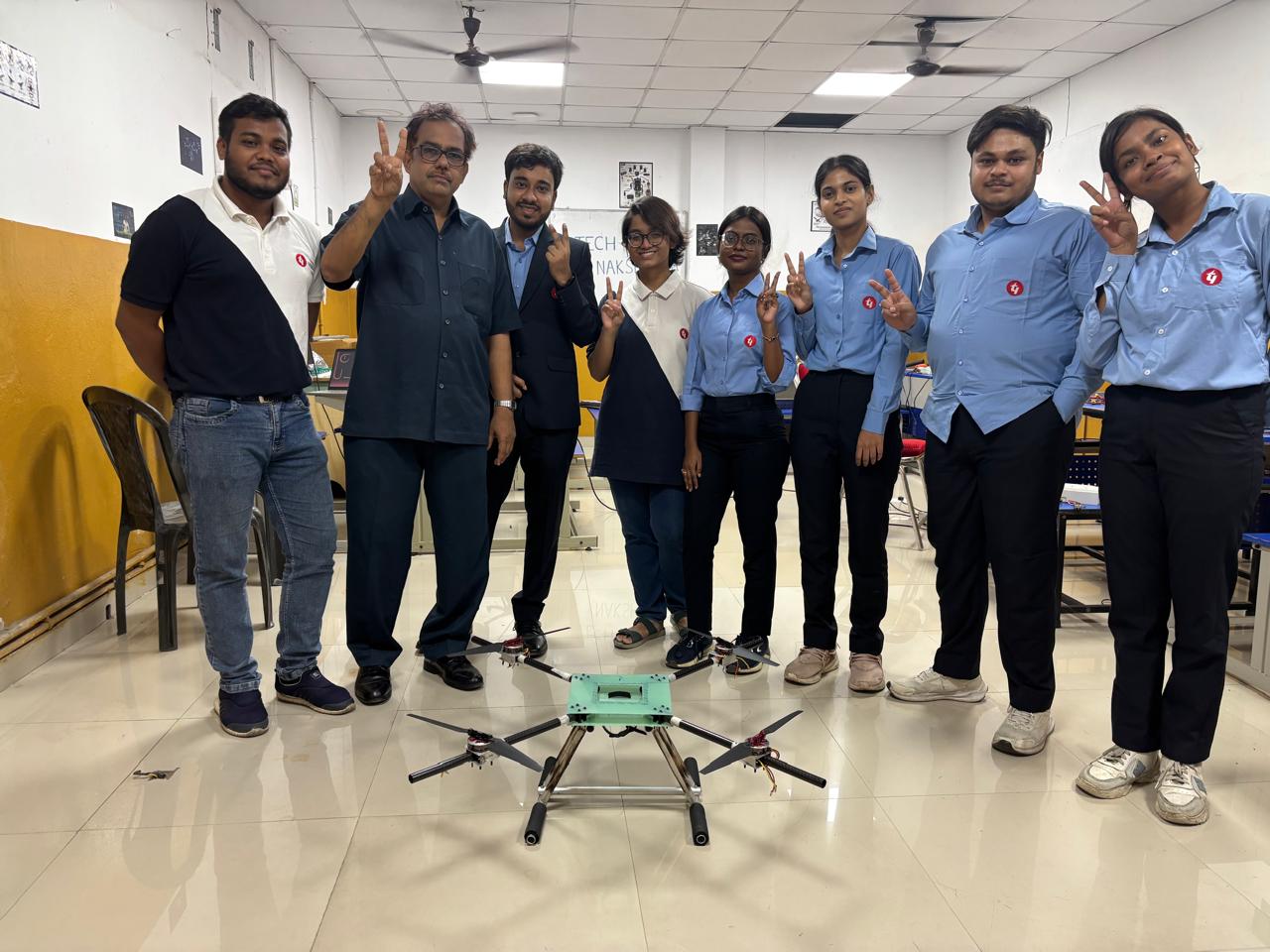
Techno India University, West Bengal, has launched a Drone Research and Incubation Laboratory to promote research and indigenous drone development. The lab supports Team TECH NAKSHATRA, which represents the university at NIDAR – India’s largest drone competition organized by the Ministry of Electronics and Information Technology and Drone Federation India.
Team TECH NAKSHATRA comprises Swarnabha Saha (Captain, MCA final year), Arka Chandra, Rahul Ruidas, Rittika Kundu (MCA final year), and Sreemoyee Mukhopadhyay, Riya Das, Sumana Adak, Anwesha De (BTech CSE final year). Guided by Dr. Sushovan Sarkar and technically mentored by alumnus Mr. Bebeto Ally, the team turned ambitious ideas into fully functional drones.
For the competition, they designed and fabricated two specialized drones. The Scout Drone was built for surveillance, detection, and geo-tagging, optimized for lightweight performance and efficient sensor integration. The Delivery Drone focused on payload transportation and precision dropping, engineered for high thrust-to-weight ratio and robust structural stability.
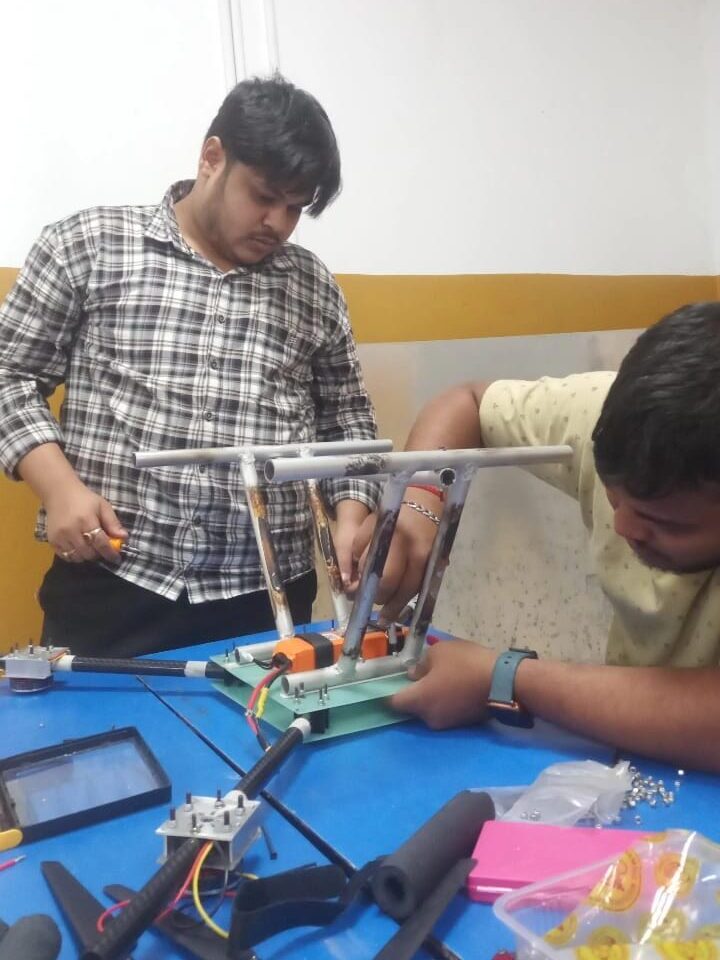
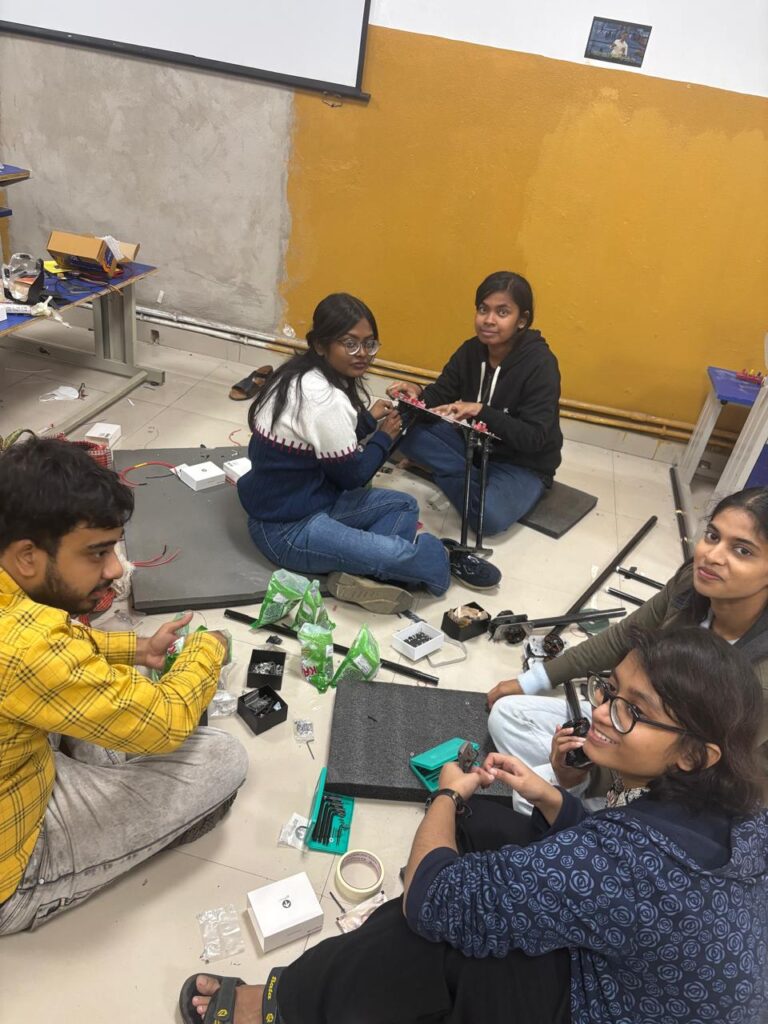
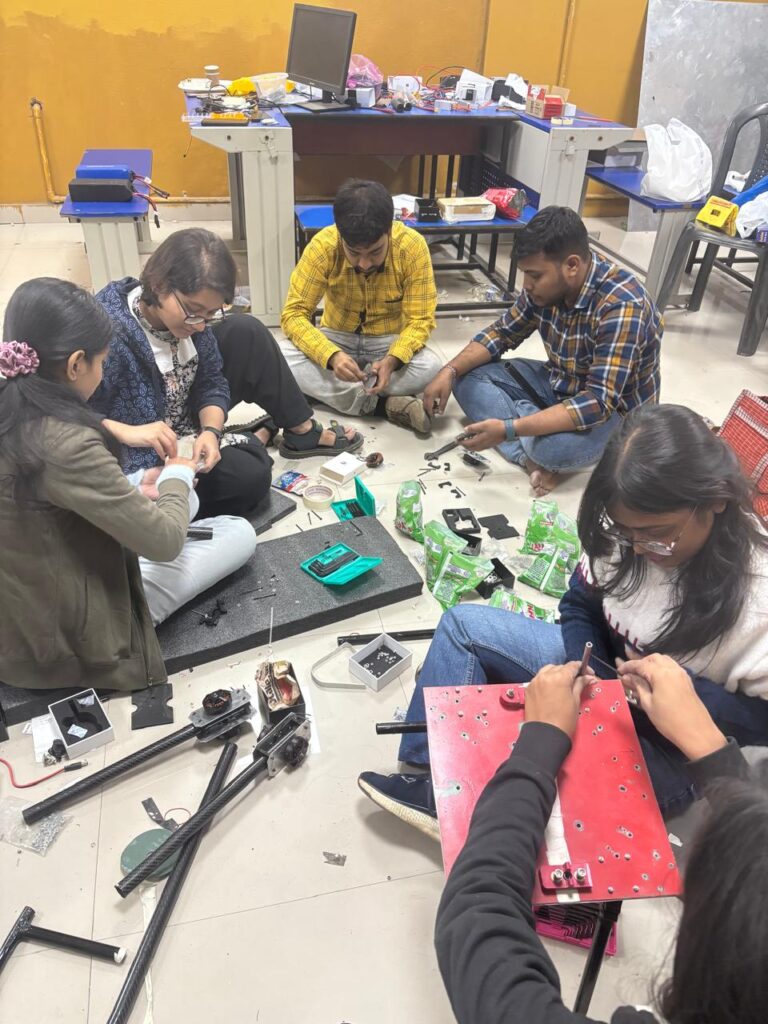
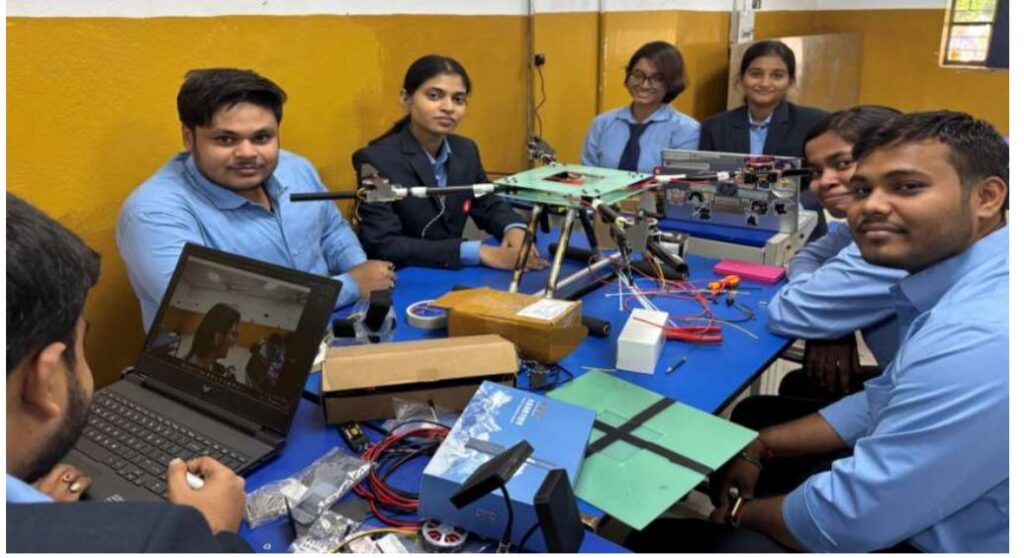
The drones met demanding operational requirements, including 30-minute flight time, 2 kg payload capacity, high autonomy, and accurate GPS navigation. The team used advanced tools such as AutoCAD, SketchUp, Blender, Rhino, Visual Studio, MAVLINK, and Mission Planner for conceptual design, 3D modelling, and mission planning.
Onboard, a Raspberry Pi supported autonomous decision-making and real-time data processing. The frames, made from acrylic sheets and carbon fibre, combined with BLDC motors, ESCs, optimized propellers, Li-Po batteries, Pixhawk flight controllers, GPS modules, telemetry radios, and a servo-based payload mechanism, ensured stability, precision, and reliable performance.
Through this project, Team TECH NAKSHATRA showcased the potential of locally developed drones for real-world applications, highlighting Techno India University’s commitment to hands-on learning, innovation, and preparing students to tackle practical technological challenges.
The success of Team TECH NAKSHATRA would not have been possible without the support and vision of Techno India University, West Bengal, and the resources provided by the newly established Drone Research and Incubation Laboratory. By fostering a culture of innovation, mentorship, and hands-on experimentation, the university has empowered its students to translate ideas into practical solutions, paving the way for future advancements in drone technology and real-world applications.